
 -by
-by The Payment Card Industry (PCI) is the backbone of secure electronic payments worldwide. Every day, millions of people use credit cards, debit cards, and digital payment methods to buy products and services. As online shopping and digital transactions continue to grow, protecting sensitive payment information has become more important than ever.
To improve payment security, the Payment Card Industry developed the Payment Card Industry Data Security Standard (PCI DSS). These globally recognized security requirements help businesses safeguard cardholder data, reduce payment fraud, and maintain customer trust.
Whether you run a small online store, a local restaurant, or a large enterprise, understanding the Payment Card Industry and PCI compliance is essential for protecting your business and customers.
What Is the Payment Card Industry?
The Payment Card Industry (PCI) refers to the global network of organizations involved in processing, storing, and securing payment card transactions. It includes merchants, payment processors, banks, payment gateways, and card networks that work together to complete secure transactions.
The primary goal of the Payment Card Industry is to ensure that cardholder information remains protected throughout every payment process.
Payment cards include:
- Credit cards
- Debit cards
- Prepaid cards
- Virtual cards
- Digital wallet payment cards
By following industry security standards, businesses can significantly reduce the risk of cyberattacks and payment fraud.
Why the Payment Card Industry Is Important
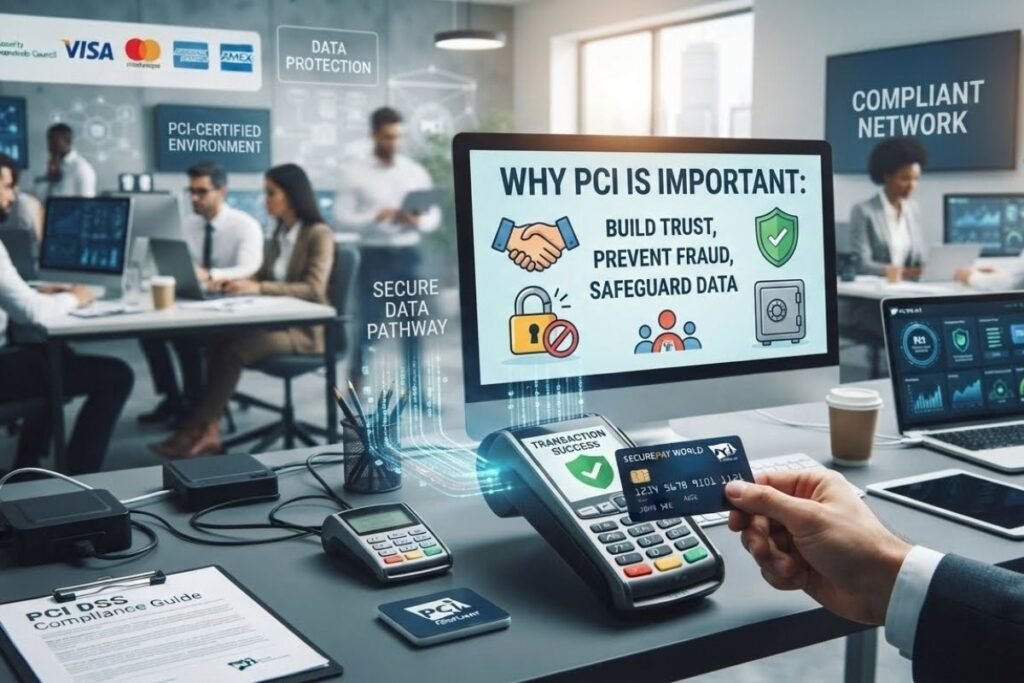
Electronic payments are now a common part of everyday activities. Without proper security, payment information could easily be stolen by cybercriminals.
The Payment Card Industry helps businesses:
- Protect customer payment information
- Prevent financial fraud
- Reduce data breaches
- Build customer confidence
- Improve business reputation
- Support secure ecommerce growth
- Meet global payment security requirements
Strong payment security benefits both businesses and consumers.
What Is PCI DSS?
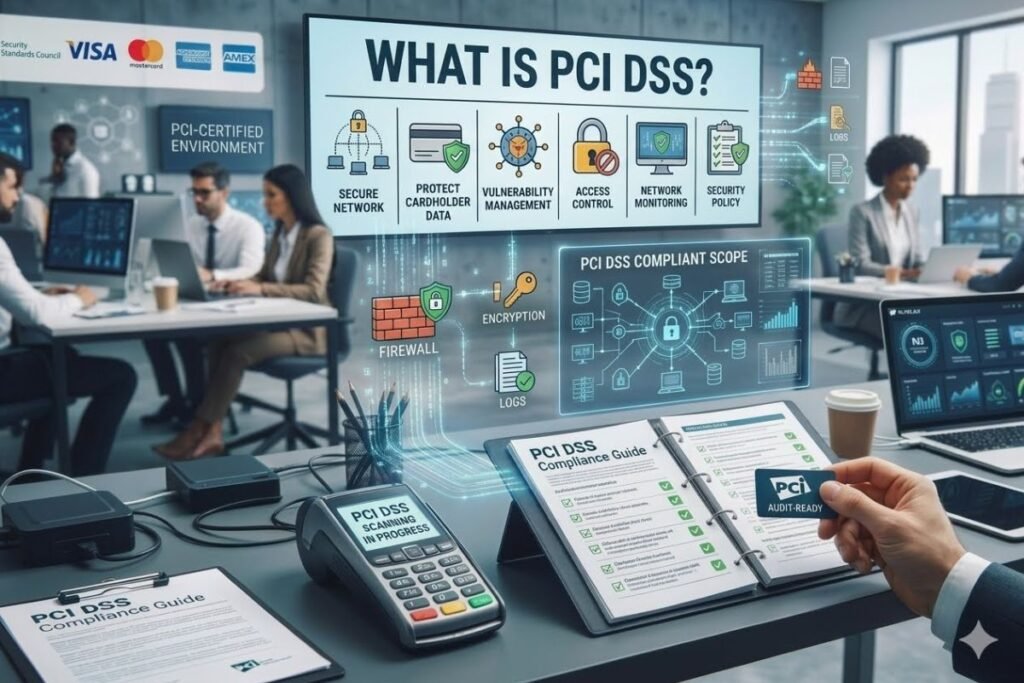
PCI DSS (Payment Card Industry Data Security Standard) is a worldwide security framework that protects cardholder data. It was created by major payment card brands to establish a common set of cybersecurity requirements.
PCI DSS applies to every organization that stores, processes, or transmits payment card information.
Its main objectives include:
- Building secure networks
- Protecting stored cardholder data
- Encrypting payment information
- Restricting unauthorized access
- Monitoring network activity
- Regularly testing security systems
PCI DSS is considered one of the most important security standards in the payment industry.
How the Payment Card Industry Works
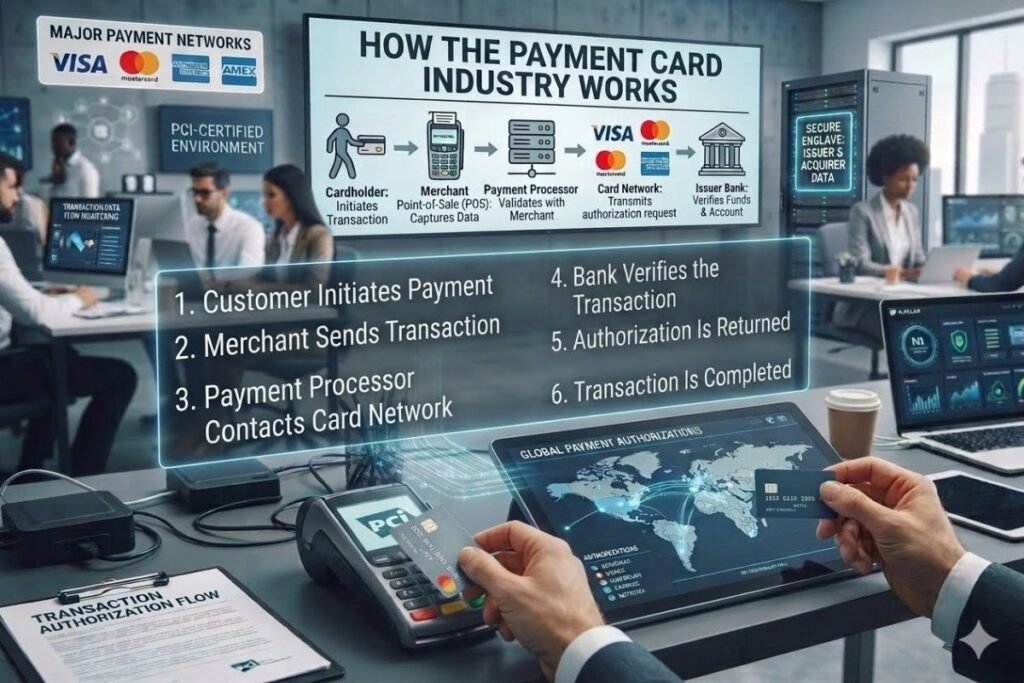
Every payment card transaction follows a secure process involving multiple participants.
Customer Initiates Payment
A customer enters card information online or uses a payment terminal.
Merchant Sends Transaction
The merchant securely forwards the payment request to a payment processor.
Payment Processor Contacts Card Network
The processor communicates with the appropriate card network and issuing bank.
Bank Verifies the Transaction
The issuing bank checks available funds and validates the payment request.
Authorization Is Returned
The approval or decline message travels back through the payment network to the merchant.
Transaction Is Completed
Once approved, the payment is completed while protecting sensitive payment data through encryption and secure communication.
The 12 Core PCI DSS Requirements
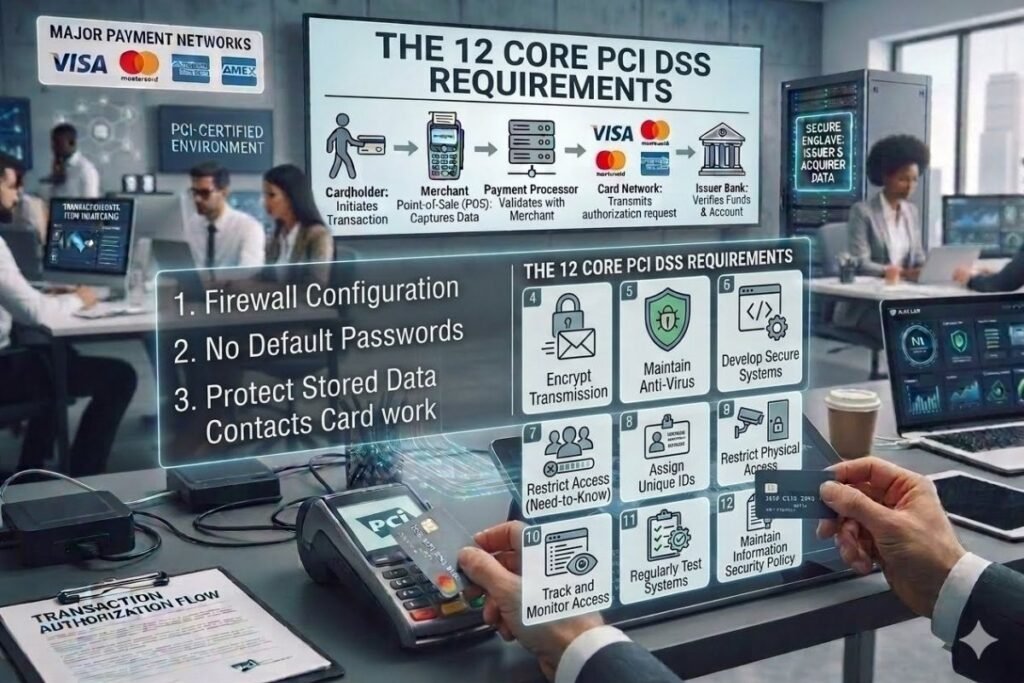
PCI DSS includes twelve essential security requirements designed to protect payment information.
- Install and maintain secure firewalls.
- Change default passwords and security settings.
- Protect stored cardholder data.
- Encrypt payment information during transmission.
- Use antivirus and anti-malware software.
- Maintain secure systems and applications.
- Restrict access to payment data.
- Assign unique user IDs.
- Control physical access to sensitive systems.
- Monitor and log network activity.
- Regularly test security systems.
- Maintain an information security policy.
Following these requirements helps organizations create a secure payment environment.
Benefits of PCI Compliance
Complying with Payment Card Industry standards offers several advantages.
Improved Customer Trust
Customers feel safer making purchases when businesses protect payment information.
Reduced Risk of Data Breaches
Security controls lower the chances of cyberattacks and stolen payment data.
Lower Financial Losses
Preventing fraud reduces chargebacks, penalties, and recovery costs.
Better Business Reputation
PCI compliance demonstrates a commitment to security and professionalism.
Stronger Cybersecurity
Many PCI security practices improve overall IT security beyond payment processing.
Who Must Follow PCI Standards?
Any business that manages payment card information must comply with PCI DSS requirements.
Examples include:
- Ecommerce websites
- Retail stores
- Restaurants
- Hotels
- Healthcare providers
- Educational institutions
- Subscription services
- Mobile payment providers
- Online marketplaces
Business size does not matter. Small businesses that process card payments are also expected to comply with PCI security requirements.
Best Practices for Payment Card Security
Meeting PCI DSS requirements is only the beginning. Businesses should also adopt additional security measures.
Recommended best practices include:
- Enable multi-factor authentication
- Encrypt sensitive payment data
- Use tokenization whenever possible
- Keep software updated
- Perform vulnerability scans
- Monitor suspicious activity
- Train employees on cybersecurity awareness
- Limit user access to payment systems
- Create an incident response plan
- Back up important business data regularly
These practices improve security and reduce operational risks.
Common PCI Compliance Mistakes

Many organizations experience compliance issues because of avoidable mistakes.
Common problems include:
- Using weak passwords
- Delaying software updates
- Storing unnecessary payment information
- Ignoring security testing
- Providing excessive user permissions
- Poor employee cybersecurity training
- Incomplete security documentation
Regular reviews help organizations maintain continuous compliance.
Future of the Payment Card Industry
The Payment Card Industry continues to evolve as payment technology advances.
Several trends are shaping the future:
- AI-powered fraud detection
- Biometric authentication
- Contactless payments
- Cloud-based payment systems
- Zero Trust security architecture
- Advanced encryption methods
- Increased tokenization of payment data
These innovations will continue improving payment security while making digital transactions faster and more convenient.
Helpful Resources
For more technology and business insights, you can also explore:
- Tech All World for cybersecurity, cloud computing, and technology guides.
- Techh AtoZ for software tutorials, digital marketing, and tech reviews.
- Restaurant for restaurant guides, booking advice, food guides, and Recipes.
- Beach Near for travel tips, secure online booking advice, and destination guides.
Frequently Asked Questions
Q. What is the Payment Card Industry?
Ans: The Payment Card Industry is the global ecosystem responsible for processing and securing payment card transactions.
Q. What does PCI stand for?
Ans: PCI stands for Payment Card Industry.
Q. What is PCI DSS?
Ans: PCI DSS stands for Payment Card Industry Data Security Standard, a worldwide framework designed to safeguard payment card information.
Q. Who needs PCI compliance?
Ans: Any business that stores, processes, or transmits payment card data should comply with PCI DSS requirements.
Q. Is PCI compliance mandatory?
Ans: Although PCI DSS is not a law in most countries, payment brands and acquiring banks require businesses that accept payment cards to comply with its security standards.
Conclusion
The Payment Card Industry plays a critical role in protecting payment card transactions around the world. Through PCI DSS, businesses have a proven framework for securing cardholder data, reducing fraud, and strengthening customer trust.
Whether you operate an ecommerce store, retail business, restaurant, or service company, following Payment Card Industry security standards helps create a safer payment environment for everyone. By maintaining PCI compliance, implementing strong cybersecurity practices, and regularly updating your security controls, your business can stay protected against evolving cyber threats while building long-term customer confidence.





1 Comment