 -by
-by Running a website without search engine optimization is like opening a shop in the middle of nowhere. No matter how valuable your products, services, or content are, people will struggle to find them unless your website is optimized for search engines.
A well-planned SEO Checklist helps website owners improve visibility, attract qualified visitors, and increase conversions. Whether you manage a local business, an online store, a technology blog, or a restaurant website, following the right SEO practices ensures your content reaches the right audience.
Unlike many outdated guides, this comprehensive checklist combines modern search engine optimization strategies with Google’s latest best practices. It covers everything from keyword research and technical optimization to local SEO and mobile performance, making it suitable for beginners and experienced marketers alike.
Why Every Website Needs an SEO Checklist
Search engines consider many different factors when determining which web pages deserve to appear at the top of search results. Without a structured optimization process, it’s easy to overlook important elements that directly affect rankings. A complete SEO Checklist keeps every optimization task organized and ensures nothing important is missed.
Benefits include:
- Higher search rankings
- Better user experience
- Faster website performance
- Increased organic traffic
- Improved conversion rates
- Better crawlability
- Stronger website authority
- Long-term growth
Whether you’re launching a brand-new website or improving an established one, following a structured website seo checklist helps maintain consistent SEO performance.
If you enjoy learning about technology, digital marketing, and online tools, visit Tech All World and Techh AtoZ for more expert resources and in-depth guides.
Understanding Modern SEO
Search Engine Optimization (SEO) is the process of improving a website so that search engines like Google understand, index, and rank it more effectively. Modern SEO focuses on much more than keywords.
Google now prioritizes:
- Helpful content
- User experience
- Fast loading speed
- Mobile usability
- Secure browsing
- High-quality backlinks
- Search intent
- Local relevance
- Content freshness
That is why a modern basic seo checklist covers technical improvements, quality content, authority building, and user satisfaction instead of keyword stuffing.
Types of SEO You Should Know
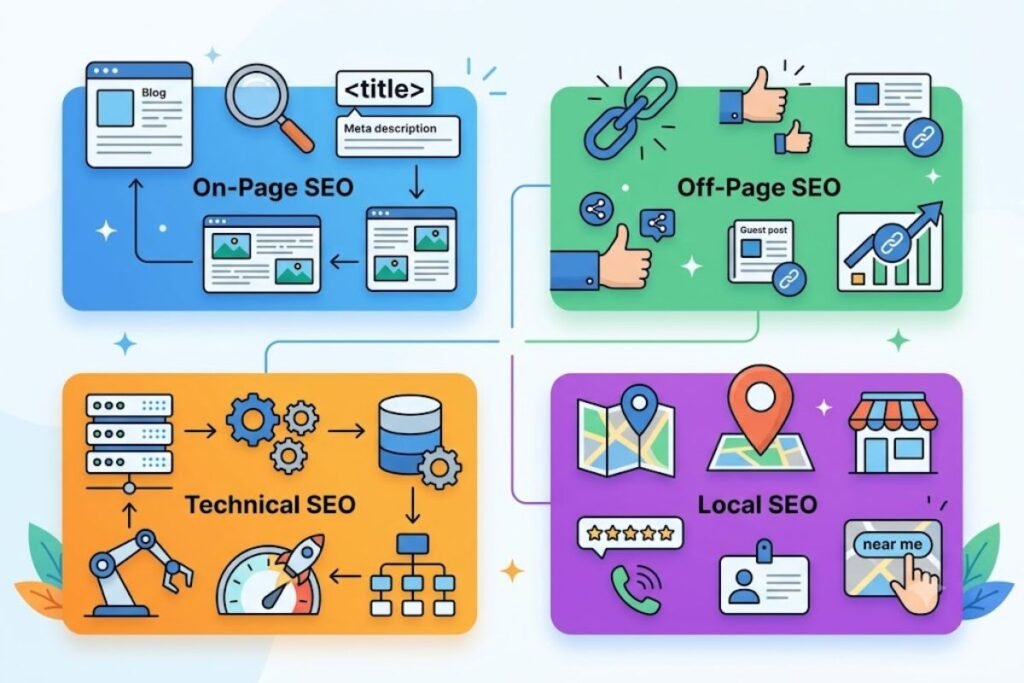
A complete SEO Checklist includes several different optimization areas.
On-Page SEO
The on-page seo checklist focuses on everything you optimize inside your website.
Examples include:
- Titles
- Meta descriptions
- URLs
- Headings
- Images
- Internal links
- Content quality
- Keyword optimization
Many people also refer to this as the onpage seo checklist, and both terms describe the same process.
Technical SEO
A technical seo checklist ensures search engines can crawl and index your website efficiently.
It includes:
- XML sitemap
- Robots.txt
- HTTPS
- Core Web Vitals
- Structured data
- Website speed
- Canonical URLs
- Crawl errors
Great content alone isn’t always enough—strong technical SEO helps ensure it can be crawled, indexed, and ranked effectively.
Off-Page SEO
An off page seo checklist focuses on building authority outside your website.
Common strategies include:
- Backlinks
- Brand mentions
- Digital PR
- Guest posting
- Social media sharing
- Local citations
Google uses these signals to measure your website’s credibility.
Local SEO
A local seo checklist helps businesses appear in local search results and Google Maps.
This is especially important for:
- Restaurants
- Hotels
- Clinics
- Salons
- Retail stores
- Lawyers
- Service providers
If your business serves a specific city or region, local SEO can significantly increase qualified traffic.
For restaurant discovery and local dining inspiration, you can also explore Restaurent.
Ecommerce SEO
Online stores require an ecommerce seo checklist because they often contain hundreds or thousands of pages.
Important areas include:
- Product pages
- Category pages
- Product schema
- Reviews
- Internal linking
- Image optimization
Businesses selling products through Shopify should also follow a dedicated shopify seo checklist to maximize store visibility.
International SEO
Businesses serving multiple countries benefit from an international seo checklist.
This includes:
- hreflang implementation
- Country targeting
- Language optimization
- Currency localization
- Regional content
International SEO helps search engines display the correct version of your website for users around the world.
How Search Engines Rank Websites
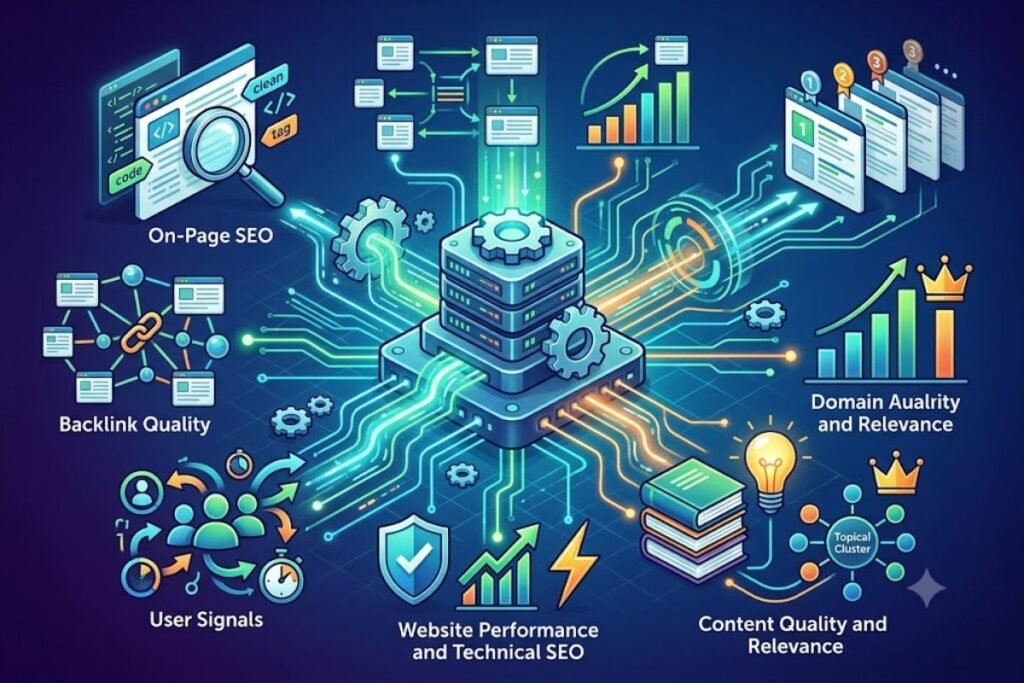
Google follows several steps before showing your website in search results.
Crawling
Googlebot discovers pages by following links across the internet. If your website has broken navigation or blocked pages, important content may never be crawled.
Indexing
Once crawled, Google stores your content in its index. Poor-quality or duplicate content may not be indexed.
Ranking
Google compares indexed pages using hundreds of signals.
Some of the strongest ranking factors include:
- Content quality
- User intent
- Backlinks
- Website speed
- Mobile friendliness
- Search experience
- Freshness
- Expertise
- Trustworthiness
A complete tech seo checklist ensures these ranking signals remain optimized over time.
Before You Start SEO
Build a strong foundation before applying any SEO optimization techniques.
Choose the Right Domain
Select a memorable, trustworthy domain name.
Avoid:
- Long names
- Hyphens
- Numbers
- Confusing spellings
A clean domain improves branding and user trust.
Install HTTPS
Google considers HTTPS a ranking factor.
Benefits include:
- Secure browsing
- Better trust
- Encrypted data
- Improved SEO signals
Never launch a website without SSL.
Set Up Google Search Console
Google Search Console helps you monitor:
- Index coverage
- Search performance
- Keywords
- Click-through rate
- Crawl issues
- Core Web Vitals
Google Search Console is a free SEO tool that provides valuable insights into your website’s search performance and indexing status.
Install Google Analytics
Analytics helps you understand:
- Traffic sources
- User behavior
- Bounce rate
- Session duration
- Conversions
- Top-performing pages
Tracking data allows you to improve your SEO strategy based on real user behavior.
Keyword Research: The Foundation of SEO

Keyword research determines what your audience searches for online. Instead of guessing, use keyword data to create helpful content that matches user intent.
Good keyword research improves:
- Rankings
- Traffic
- Click-through rate
- Engagement
- Conversions
A strong seo checklist for a new website always begins with thorough keyword research.
Understand Search Intent
Every keyword has an intent.
Informational
Users want information.
Examples:
- What is SEO?
- How does local SEO work?
Navigational
Users want a specific website.
Examples:
- Google Search Console
- YouTube
Commercial
Users compare products or services.
Examples:
- Best SEO tools
- Shopify SEO apps
Transactional
Users are ready to buy.
Examples:
- Buy SEO software
- Hire SEO agency
Matching search intent is one of Google’s most important ranking factors.
Find Primary and Secondary Keywords
Every page should target:
- One primary keyword
- Multiple secondary keywords
- Semantic keywords
- Related entities
This creates topical relevance and improves rankings naturally.
For example:
Primary keyword: SEO Checklist
Supporting keywords:
- website seo checklist
- mobile seo checklist
- seo checklist template
- seo checklist for blog posts
- seo checklist for new websites
Analyze Your Competitors
Study websites already ranking on Google’s first page.
Evaluate:
- Content length
- Heading structure
- Images
- FAQs
- Internal links
- External references
- User experience
- Page speed
- Content depth
Instead of copying competitors, identify gaps and create more comprehensive, up-to-date, and practical content.
Create a Content Plan
Publishing random articles rarely delivers long-term SEO success. Build a content strategy around topical clusters.
For example:
SEO
- Beginner SEO Guide
- Local SEO
- Technical SEO
- Link Building
- Keyword Research
- SEO Tools
- AI SEO
- Core Web Vitals
Technology websites like Tech All World and Techh AtoZ can strengthen topical authority by covering related subjects in depth and linking them together naturally.
Build an SEO-Friendly Website Structure

A logical site structure helps both users and search engines.
Follow these best practices:
- Ensure users can reach your most important pages within three clicks from the homepage.
- Use descriptive, keyword-rich URLs.
- Group related content into categories.
- Add breadcrumb navigation.
- Link related articles naturally.
- Avoid orphan pages with no internal links.
A clear structure improves crawling, indexing, and user experience.
Start with an SEO Checklist Template
Using a seo checklist template helps you track progress and ensure no critical optimization step is overlooked. Whether you’re working on a personal blog, a business website, or an online store, a reusable checklist saves time and keeps your SEO efforts consistent.
Complete Local SEO Checklist for Better Rankings
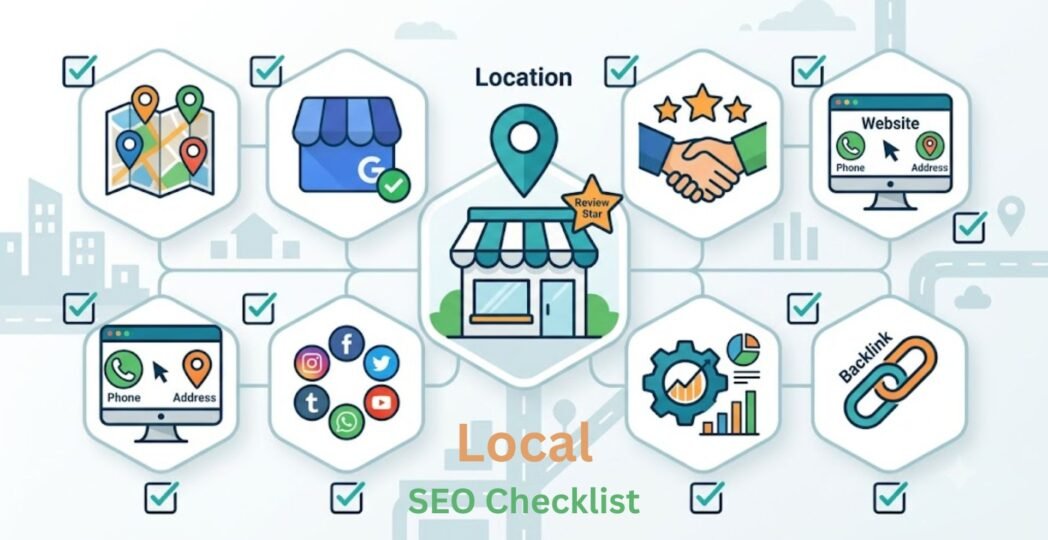
If your business serves customers in a specific city, region, or country, following a proven local seo checklist can dramatically improve your visibility in local search results. Google wants to recommend businesses that are relevant, trustworthy, and easy for users to contact.
Whether you own a restaurant, retail shop, hotel, dental clinic, law firm, or local service business, these steps will help you build a strong local search presence.
Claim and Optimize Your Google Business Profile
A well-optimized Google Business Profile (GBP) is an essential part of any local SEO strategy, helping your business gain greater visibility in Google Search and Google Maps while attracting more local customers.
Complete every section of your profile, including:
- Business name
- Primary and secondary categories
- Business description
- Address
- Phone number
- Website URL
- Business hours
- Service areas
- Appointment links
- Products or services
- High-quality photos
- Business logo
An optimized profile increases your chances of appearing in Google’s Local Pack and Google Maps.
Best Practices
- Use your real business name.
- Select the most relevant category.
- Keep your business hours updated.
- Add new photos regularly.
- Publish weekly Google Posts.
- Answer customer questions promptly.
Maintain NAP Consistency
NAP stands for:
- Name
- Address
- Phone Number
Your NAP information should be identical across:
- Website
- Google Business Profile
- Yelp
- Bing Places
- Apple Maps
- Local business directories
Even small inconsistencies can confuse search engines and reduce local trust.
Create Dedicated Location Pages
If your business operates in multiple cities or has several branches, create a unique landing page for each location to improve local search visibility.
Each page should include:
- Unique content
- Local keywords
- Contact details
- Google Map embed
- Customer reviews
- Business hours
- FAQs
- Driving directions
Avoid copying the same content across multiple locations.
Optimize for Local Keywords
Instead of targeting only broad keywords, include local search terms naturally.
Examples:
- SEO agency in London
- Dentist in Toronto
- Pizza restaurant in New York
- Beach hotels in Miami
Use local keywords in:
- Page title
- Meta description
- H1
- H2 headings
- URL
- Image alt text
- Content
Natural optimization performs much better than keyword stuffing.
Add Local Business Schema
Structured data helps search engines understand your business information.
Include schema for:
- Business name
- Address
- Phone
- Opening hours
- Reviews
- Price range
- Coordinates
- Website
Schema increases your chances of earning rich search results.
Complete On-Page SEO Checklist
A comprehensive on-page seo checklist ensures every page is optimized for both users and search engines.
Many SEO professionals also call this an onpage seo checklist or on page seo checklist. Regardless of the wording, the goal is to create pages that are easy to understand, relevant, and valuable.
Write an SEO-Friendly Title Tag
Your title tag should:
- Include the primary keyword
- Stay within 50–60 characters
- Encourage clicks
- Match search intent
Example:
Local SEO Checklist: 25 Proven Steps to Rank Higher
Create Compelling Meta Descriptions
Although meta descriptions are not a direct ranking factor, they influence click-through rates.
Best practices:
- 140–160 characters
- Include the primary keyword
- Explain the page value
- Add a call to action
Use One H1 Heading
Every page should contain only one H1.
Then organize your content with:
- H2
- H3
- H4
A logical heading structure improves readability and crawling.
Optimize URLs
Good URLs are:
- Short
- Descriptive
- Keyword-rich
Example:
example.com/local-seo-checklist
Avoid:
example.com/post?id=12345
Write Helpful, Original Content
Google rewards content that genuinely helps users.
Your content should:
- Answer questions clearly
- Cover topics in depth
- Use examples
- Include statistics where appropriate
- Be easy to scan
- Stay up to date
Focus on solving user problems rather than writing for search engines alone.
Optimize Images
Images improve user engagement, but they also need optimization.
Checklist:
- Compress images
- Use descriptive filenames
- Add keyword-rich alt text
- Choose modern formats like WebP
- Enable lazy loading
Optimized images improve page speed and accessibility.
Add Internal Links
Internal links help distribute authority across your website.
Link related pages naturally.
For example:
- Learn more about tech & digital marketing trends on Tech All World.
- Explore technology tutorials and buying guides on Techh AtoZ.
- Discover restaurant recommendations on Restaurent.
- Plan your next beach vacation with destination guides from Beach Near.
Good internal linking also helps Google discover new content faster.
Use External Links
Linking to authoritative sources improves content credibility.
Examples include:
- Google Search Central
- Google PageSpeed Insights
- W3C
- Schema.org
Only reference trustworthy, relevant resources.
Complete Technical SEO Checklist
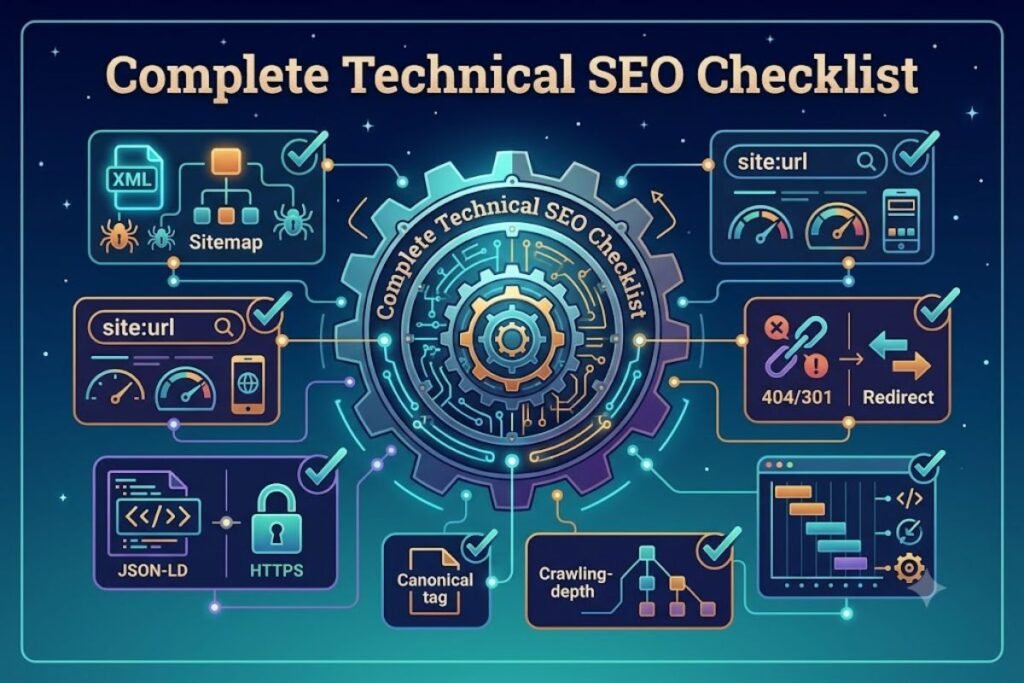
A strong technical seo checklist ensures search engines can efficiently crawl, index, and understand your website.
Technical SEO often determines whether great content reaches its ranking potential.
Improve Website Speed
Fast websites provide a better user experience.
Ways to improve speed:
- Compress images
- Enable browser caching
- Minify CSS and JavaScript
- Use a CDN
- Upgrade hosting
- Remove unnecessary plugins
Website loading speed plays an important role in search visibility and creates a better experience for visitors.
Optimize Core Web Vitals
Google measures user experience through Core Web Vitals.
Focus on:
- Largest Contentful Paint (LCP)
- Interaction to Next Paint (INP)
- Cumulative Layout Shift (CLS)
Improving these metrics leads to a smoother browsing experience.
Make Your Website Mobile-Friendly
A complete mobile seo checklist is essential because Google primarily uses mobile-first indexing.
Ensure your website:
- Uses responsive design
- Has readable fonts
- Features touch-friendly buttons
- Loads quickly on mobile devices
- Avoids intrusive pop-ups
Test your pages regularly on different screen sizes.
Secure Your Website with HTTPS
HTTPS protects user data and builds trust.
Always:
- Install an SSL certificate
- Redirect HTTP to HTTPS
- Update internal links
- Avoid mixed-content warnings
Security remains an important ranking signal.
Submit an XML Sitemap
An XML sitemap improves your website’s visibility by helping search engines discover important pages more efficiently.
Update it whenever you:
- Publish new content
- Remove pages
- Change URLs
Upload your XML sitemap through Google Search Console and Bing Webmaster Tools so search engines can crawl your website more effectively.
Configure Robots.txt Correctly
A robots.txt file guides search engine crawlers by specifying which pages and directories they can access and which areas should remain excluded from crawling.
Avoid blocking:
- Important landing pages
- Blog posts
- Product pages
- Category pages
Regularly review this file after website updates.
Fix Crawl Errors
Monitor Google Search Console for issues such as:
- 404 errors
- Redirect chains
- Broken links
- Server errors
- Soft 404s
Resolving these problems improves crawl efficiency.
Use Canonical Tags
Canonical tags help prevent duplicate content issues.
Use them when:
- Similar pages exist
- Product variations share content
- URL parameters generate duplicates
This tells Google which version should be indexed.
Content Optimization Checklist
Content remains the foundation of SEO success. Use this seo checklist for blog posts every time you publish new content.
Before Publishing
✔ Target one primary keyword
✔ Add related semantic keywords
✔ Include the keyword naturally
✔ Write unique content
✔ Add internal links
✔ Add external references
✔ Optimize images
✔ Create a compelling title
✔ Write a meta description
✔ Add FAQs
✔ Proofread carefully
Publishing consistently high-quality content builds authority and improves long-term rankings.
Optimize for Featured Snippets
Increase your chances of appearing in featured snippets by:
- Answering questions directly
- Using numbered lists
- Creating comparison tables
- Writing concise definitions
- Structuring content with clear headings
Featured snippets often generate higher click-through rates.
Improve Readability
Easy-to-read content performs better. Best practices include:
- Short paragraphs
- Simple language
- Bullet points
- Descriptive headings
- Active voice
- Transition words
This aligns with both user expectations and Rank Math readability recommendations.
Refresh Existing Content
SEO is not a one-time task. Review your top-performing pages regularly to:
- Update statistics
- Replace outdated screenshots
- Add new sections
- Improve internal linking
- Expand FAQs
- Refresh keywords naturally
Keeping content current helps maintain rankings over time.
Complete Off Page SEO Checklist
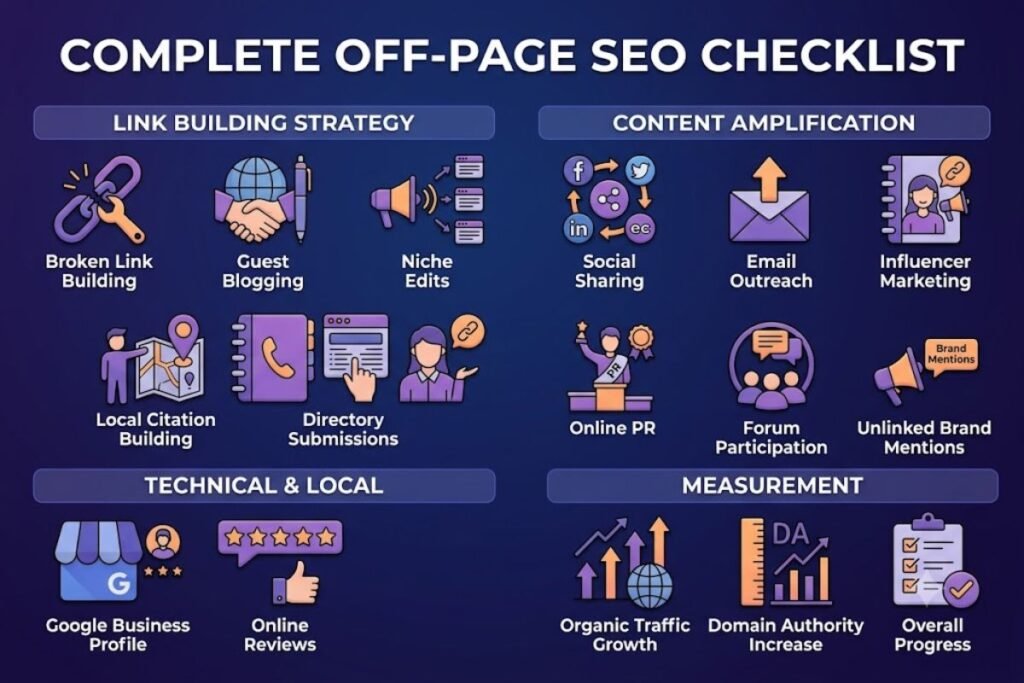
While on-page and technical SEO improve your website internally, an effective off page seo checklist builds your website’s authority and trust across the web. Google uses these external signals to evaluate your credibility.
Build High-Quality Backlinks
Backlinks remain one of the strongest ranking factors. Focus on earning links from reputable, relevant websites instead of buying or exchanging low-quality links.
Best practices include:
- Publish original research and case studies.
- Create comprehensive guides and tutorials.
- Write guest posts for authoritative websites.
- Earn mentions through digital PR.
- Share valuable content that others naturally reference.
Prioritize quality over quantity. A few authoritative backlinks are often more valuable than hundreds of spammy ones.
Manage Local Citations
Local citations mention your business name, address, and phone number on other websites.
Submit your business to trusted directories such as:
- Google Business Profile
- Bing Places
- Apple Maps
- Yelp
- Facebook Business
- Industry-specific directories
Keep your information consistent across every platform.
Encourage Customer Reviews
Positive reviews increase customer trust and improve local rankings.
Ask satisfied customers to leave reviews on:
- Yelp
- Industry review platforms
Respond to every customer review with courtesy, professionalism, and helpful information, regardless of whether the feedback is positive or negative.
Build Your Brand
Google increasingly rewards recognizable brands.
Strengthen your brand by:
- Publishing expert content
- Being active on social media
- Participating in industry events
- Building an email newsletter
- Collaborating with influencers and businesses
A trusted brand often earns more backlinks and higher click-through rates.
Ecommerce SEO Checklist
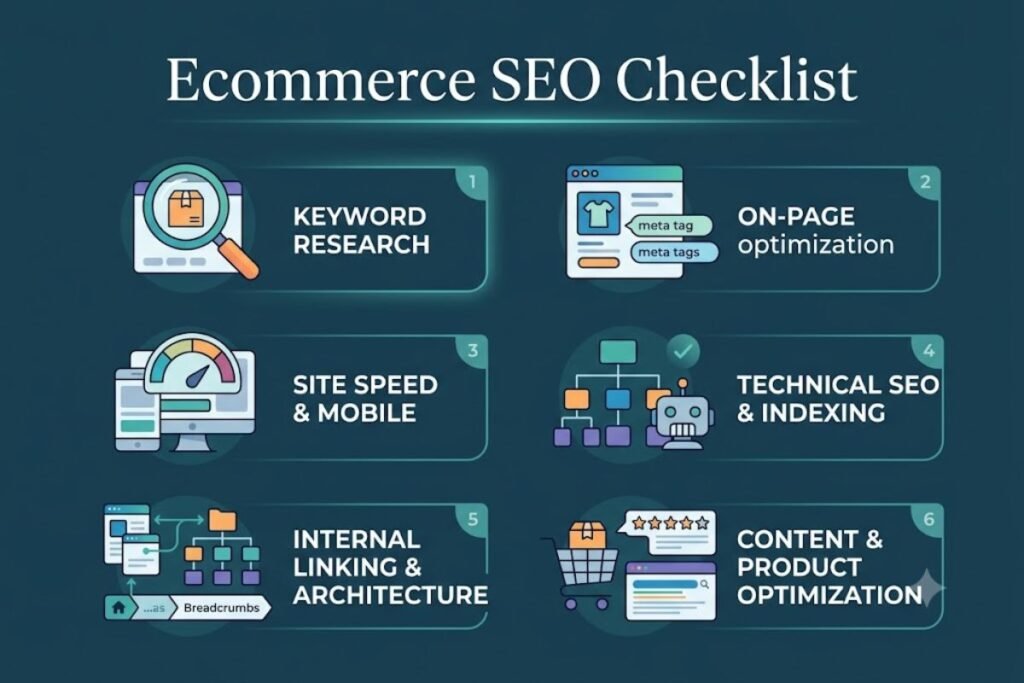
An online store requires a dedicated ecommerce seo checklist because product pages, categories, and filters create unique SEO challenges.
Optimize:
- Product titles
- Product descriptions
- Category pages
- Product images
- Customer reviews
- Product schema
- Internal linking
- Navigation
Every product should have unique, descriptive content rather than using manufacturer descriptions.
Businesses following an e commerce seo checklist should also optimize for transactional search intent and simplify the checkout experience.
Product Page Best Practices
Each product page should include:
- Unique title tag
- Optimized meta description
- High-quality images
- Descriptive alt text
- Customer reviews
- FAQs
- Product schema markup
- Related products
- Internal links
These improvements help both search engines and shoppers.
Shopify SEO Checklist
Shopify provides a solid SEO foundation, but additional optimization is still important.
A complete shopify seo checklist includes:
- Customize title tags.
- Edit meta descriptions.
- Optimize product URLs.
- Compress product images.
- Improve collection pages.
- Add structured data.
- Remove duplicate content.
- Improve internal linking.
- Monitor redirects.
- Optimize page speed.
Regular audits keep Shopify stores competitive in search results.
International SEO Checklist
Businesses targeting multiple countries should follow an international seo checklist.
Key tasks include:
- Implement hreflang tags.
- Create localized content.
- Translate pages professionally.
- Use country-specific keywords.
- Display local currencies.
- Adapt measurements and date formats.
- Host content on appropriate domains or subdirectories.
Localization should go beyond translation by matching local search behavior and cultural expectations.
Website Migration SEO Checklist
Website redesigns and platform changes can affect rankings if SEO is overlooked.
A comprehensive website migration seo checklist includes:
- Back up the existing website.
- Crawl current URLs.
- Map old URLs to new URLs.
- Implement 301 redirects.
- Update internal links.
- Submit a new XML sitemap.
- Verify canonical tags.
- Test structured data.
- Monitor Google Search Console.
- Track traffic after launch.
Proper planning minimizes traffic loss during migration.
SEO Checklist for New Websites
Launching a new website requires a strong foundation. This seo checklist for new websites ensures you’re ready from day one.
Complete the following before publishing:
- Register a memorable domain.
- Install SSL (HTTPS).
- Set up Google Search Console.
- Install Google Analytics.
- Create an XML sitemap.
- Configure robots.txt.
- Optimize site speed.
- Use responsive design.
- Publish original content.
- Build internal links.
- Add structured data.
- Optimize images.
- Submit the sitemap to search engines.
Following this seo checklist for a new website helps search engines discover and index your content more efficiently.
Monthly SEO Maintenance Checklist
To maintain strong search rankings, SEO should be reviewed, updated, and improved on a regular basis.
Every month:
- Review keyword rankings.
- Update outdated content.
- Fix broken links.
- Check crawl errors.
- Monitor Core Web Vitals.
- Improve internal linking.
- Analyze competitors.
- Build new backlinks.
- Respond to customer reviews.
- Refresh images and media.
- Publish new articles.
Consistent maintenance keeps your website competitive.
Common SEO Mistakes to Avoid

Even experienced website owners can make mistakes that reduce rankings.
Avoid these common issues:
- Keyword stuffing
- Duplicate content
- Slow page speed
- Broken internal links
- Missing meta descriptions
- Poor mobile usability
- Ignoring search intent
- Buying backlinks
- Thin content
- Outdated information
- Missing structured data
- Overusing AI-generated content without human editing
Regular audits help identify and fix these problems before they affect performance.
Complete SEO Checklist Template
Use this practical seo checklist template whenever you optimize a website.
Keyword Research
✔ Identify one primary keyword
✔ Find semantic keywords
✔ Analyze search intent
✔ Study competitors
✔ Group related keywords
On-Page SEO
✔ Optimize title tag
✔ Write meta description
✔ Use one H1
✔ Organize headings (H2–H4)
✔ Optimize URLs
✔ Add internal links
✔ Add authoritative external links
✔ Optimize images
✔ Include FAQs
✔ Improve readability
Technical SEO
✔ HTTPS enabled
✔ XML sitemap submitted
✔ Robots.txt configured
✔ Canonical tags implemented
✔ Mobile-friendly design
✔ Fast loading pages
✔ Structured data added
✔ Core Web Vitals optimized
✔ Crawl errors resolved
✔ Broken links fixed
Local SEO
✔ Google Business Profile optimized
✔ NAP consistency maintained
✔ Location pages created
✔ Local keywords added
✔ Local schema implemented
✔ Customer reviews collected
✔ Local citations updated
Off-Page SEO
✔ Build quality backlinks
✔ Earn brand mentions
✔ Guest posting
✔ Digital PR
✔ Social media promotion
✔ Reputation management
Content Strategy
✔ Publish consistently
✔ Update old articles
✔ Expand topical authority
✔ Add new internal links
✔ Monitor user engagement
Recommended SEO Tools
Using reliable tools simplifies optimization and helps you monitor progress.
Some of the most useful SEO tools include:
- Google Search Console
- Google Analytics
- Google Keyword Planner
- Google PageSpeed Insights
- Bing Webmaster Tools
- Ahrefs
- Semrush
- Screaming Frog SEO Spider
- Moz Pro
- Rank Math
- Yoast SEO
- GTmetrix
Choose the tools that match your website size, goals, and budget.
Final Thoughts
A successful SEO Checklist combines strategy, consistency, and ongoing optimization. Long-term SEO success comes from following a complete optimization strategy that includes an on-page seo checklist, technical seo checklist, local seo checklist, off page seo checklist, mobile seo checklist, and specialized practices such as a shopify seo checklist when needed, international seo checklist, and website migration seo checklist. Following this complete SEO checklist helps your website build lasting authority, attract qualified visitors, and achieve consistent organic growth over time.
Remember that SEO is an ongoing process rather than a one-time task. Regularly monitor your website’s performance, update content, improve user experience, and adapt to changes in search engine algorithms. Websites that consistently provide helpful, accurate, and well-optimized content are more likely to earn higher rankings and long-term success.
For additional insights into technology, digital marketing, and online tools, explore Tech All World and Techh AtoZ. If you’re looking for dining recommendations, visit Restaurent, and for beach travel inspiration and destination guides, check out Beach Near. Building meaningful connections between relevant resources not only enhances user experience but also supports a well-structured SEO strategy.
Frequently Asked Questions
Q: What is an SEO checklist?
Ans: An SEO checklist is a practical guide that outlines the essential steps needed to improve a website’s visibility, performance, and rankings in search engine results. It includes on-page, technical, local, and off-page SEO practices.
Q: Why is local SEO important?
Ans: Local SEO helps businesses appear in location-based searches and Google Maps, making it easier for nearby customers to discover and contact them.
Q: How often should I perform an SEO audit?
Ans: A full SEO audit is recommended every three to six months, while essential metrics like traffic, rankings, and crawl errors should be monitored monthly.
Q: Is technical SEO necessary for small websites?
Ans: Yes. Small websites can achieve better SEO performance with fast page speeds, mobile-friendly design, secure HTTPS connections, and proper search engine indexing.
Q: Can I do SEO without paid tools?
Ans: Absolutely. Free tools such as Google Search Console, Google Analytics, Google Keyword Planner, and Google PageSpeed Insights provide valuable insights for most websites.
Q: How quickly can SEO improve website rankings?
Ans: SEO is a long-term strategy. Depending on your competition, website authority, and content quality, noticeable improvements may take several weeks to several months.