
 -by
-by Ranking a website on Google is no longer about adding a few keywords and hoping for the best. Search engines now evaluate hundreds of ranking signals, including content quality, user experience, technical performance, authority, and relevance. Whether you manage a personal blog, an online store, or a global business website, following a complete SEO Checklist helps you build a strong foundation for sustainable organic growth.
An International SEO Checklist goes one step further. It ensures your website reaches audiences in different countries and languages while providing localized experiences that search engines understand. Instead of competing only in one market, you can optimize your website to attract visitors worldwide.
This guide covers every essential aspect of modern SEO, including technical SEO, on-page optimization, off-page SEO, international targeting, mobile optimization, website speed, structured data, content strategy, and ongoing maintenance. It also includes practical recommendations suitable for beginners and experienced marketers alike.
If you regularly publish technology content, visit Tech All World and Techh AtoZ for the latest technology guides and digital trends. For restaurant recommendations and travel dining inspiration, explore Restaurent.net, while Beach Near helps travelers discover beautiful beaches and nearby attractions around the world.
Why Every Website Needs an SEO Checklist
Many websites fail because owners publish content without a structured optimization process. A checklist ensures every important SEO task is completed before and after publishing.
Benefits include:
- Better search engine visibility
- Higher keyword rankings
- More organic traffic
- Improved user experience
- Faster website performance
- Higher conversion rates
- Better indexing
- Stronger website authority
- Long-term sustainable growth
Instead of fixing problems later, following a complete website seo checklist helps prevent SEO mistakes before they affect rankings.
What Is an International SEO Checklist?
An international seo checklist is a structured list of optimization tasks that help websites rank across multiple countries and languages.
Unlike a basic seo checklist, international SEO focuses on helping Google understand:
- Which countries your content targets
- Which language each page uses
- Which version of your website users should see
- How localized content should appear in search results
International SEO combines technical implementation with localized content strategy.
A complete international strategy includes:
- Country targeting
- Language targeting
- hreflang implementation
- Local keyword research
- Localized content
- Technical optimization
- Mobile optimization
- Fast page speed
- International backlinks
Start with a Strong SEO Foundation
Before optimizing globally, ensure your website follows SEO best practices.
Choose the Right Domain Structure
There are several approaches for international websites.
Country Code Top-Level Domains (ccTLD)
Examples:
- example.co.uk
- example.ca
- example.de
Advantages:
- Strong local trust
- Clear geographic targeting
- Better local branding
Disadvantages:
- Higher maintenance
- Separate SEO authority
Subdomains
Examples:
- uk.example.com
- fr.example.com
Advantages:
- Easier management
- Separate localization
Disadvantages:
- Authority may be split
Subdirectories (Recommended)
Examples:
- example.com/uk/
- example.com/fr/
Advantages:
- Easier SEO management
- Shares domain authority
- Simple maintenance
- Preferred by many international businesses
Google supports all three methods, but subdirectories often provide the best balance between scalability and SEO performance.
Perform International Keyword Research
Keyword research is the backbone of every successful SEO Checklist.
Do not assume that the same keywords work worldwide.
For example:
Americans search:
- Cell phone
- Vacation
British users search:
- Mobile phone
- Holiday
Australian users may use completely different terms.
Research keywords separately for every target country.
Use keyword research tools to identify:
- Search volume
- Competition
- Search intent
- Seasonal trends
- Local terminology
Always prioritize user intent over keyword volume.
Understand Search Intent
Modern SEO rewards pages that satisfy user intent.
The four primary search intents are:
Informational
Example:
“What is SEO?”
Navigational
Example:
“Google Search Console”
Commercial
Example:
“Best SEO software”
Transactional
Example:
“Buy SEO tools”
Your content should match the intent behind every keyword.
Build an Effective Website Structure
A clean website architecture helps users and search engines.
Best practices include:
- Logical navigation
- Simple URL structure
- Breadcrumb navigation
- Category organization
- Internal linking
- XML sitemap
Example:
Home
↓
SEO
↓
Technical SEO
↓
International SEO
↓
International SEO Checklist
This hierarchy improves crawling and user experience.
Create SEO-Friendly URLs
URLs should be:
- Short
- Descriptive
- Readable
- Keyword focused
Good:
example.com/international-seo-checklist
Avoid:
example.com/page?id=248973
Keep URLs consistent across every language version.
Complete Your On-Page SEO Checklist
A strong on page seo checklist remains one of Google’s most influential ranking factors.
Every page should include:
Optimized Title Tag
Include the target keyword naturally.
Example:
International SEO Checklist: Complete Guide for Global Rankings
Write a Compelling Meta Description
Although it doesn’t directly improve rankings, it increases click-through rates.
A good description should:
- Include the keyword
- Encourage clicks
- Stay under recommended character limits
- Clearly explain the page
Use One H1
Every page should contain one descriptive H1.
Example:
International SEO Checklist
Organize Content with H2 and H3
A logical heading structure improves readability.
Example:
H2 Technical SEO
H3 XML Sitemap
H3 Robots.txt
H3 HTTPS
Optimize Images
Images improve user engagement but should also support SEO.
Best practices:
- Compress images
- Use descriptive filenames
- Add ALT text
- Use modern formats like WebP
- Lazy load images
Example ALT text:
International SEO Checklist workflow diagram
Write Helpful Content
Google rewards content that genuinely helps users.
Avoid:
- Keyword stuffing
- Thin content
- Duplicate pages
Instead:
- Answer questions
- Explain concepts clearly
- Include examples
- Update content regularly
Develop a Strong Content Strategy

Publishing random articles rarely produces long-term results. Create content clusters around major topics. You can also use free AI tools for content creation to generate ideas, streamline your workflow, and support a consistent publishing strategy.
Example:
Main Topic: SEO Checklist
Supporting Articles:
- technical seo checklist
- mobile seo checklist
- local seo checklist
- off page seo checklist
- seo checklist for blog posts
- seo checklist template
- website migration seo checklist
- seo checklist for new websites
- shopify seo checklist
- ecommerce seo checklist
This pillar-and-cluster strategy strengthens topical authority and helps search engines understand your expertise.
Optimize Content for Multiple Languages
Translation alone is not enough.
Instead:
- Adapt content culturally
- Use local currency
- Update measurements
- Use local spelling
- Include country-specific examples
Good localization creates a better experience for international visitors and improves engagement signals.
Implement Hreflang Tags Correctly
Hreflang tags tell search engines which language and regional version of a page to display.
Example:
- English (US)
- English (UK)
- French (France)
- Spanish (Spain)
Correct hreflang implementation prevents duplicate content issues and ensures users see the most relevant version of your content.
Technical SEO Checklist for International Websites
A strong technical seo checklist ensures search engines can crawl, understand, and index your website efficiently. Even the best content may struggle to rank if technical issues prevent search engines from accessing it. Technical SEO forms the foundation of every successful SEO Checklist, especially for websites targeting multiple countries and languages.
Secure Your Website with HTTPS
Security is a confirmed Google ranking factor. Every page on your website should use HTTPS instead of HTTP.
Benefits include:
- Protects user data
- Builds visitor trust
- Improves search rankings
- Prevents browser security warnings
After enabling HTTPS:
- Redirect all HTTP URLs to HTTPS using 301 redirects.
- Update internal links.
- Update canonical tags.
- Resubmit your sitemap in Google Search Console.
Improve Website Speed
Page speed directly affects user experience and search rankings. A slow website increases bounce rates and reduces conversions.
To improve loading speed:
- Compress images before uploading.
- Enable browser caching.
- Minify CSS, JavaScript, and HTML files.
- Use a Content Delivery Network (CDN).
- Reduce unnecessary plugins and scripts.
- Choose reliable web hosting.
- Enable GZIP or Brotli compression.
- Optimize database performance.
Fast-loading pages improve both desktop and mobile experiences.
Optimize Core Web Vitals
Google measures user experience through Core Web Vitals.
Focus on these metrics:
Largest Contentful Paint (LCP)
Measures loading performance.
Target:
- Less than 2.5 seconds
Interaction to Next Paint (INP)
Measures responsiveness.
Target:
- Less than 200 milliseconds
Cumulative Layout Shift (CLS)
Measures visual stability.
Target:
- Less than 0.1
Improving these metrics helps create a smoother browsing experience.
Create and Submit XML Sitemaps
An XML sitemap makes it easier for search engines to locate and index your site’s most valuable pages.
Include:
- Blog posts
- Product pages
- Categories
- Landing pages
- Language versions
Avoid including:
- Redirect pages
- Duplicate URLs
- Noindex pages
- Broken URLs
Submit your sitemap to Google Search Console and Bing Webmaster Tools after every major update.
Optimize Robots.txt
The robots.txt file helps control search engine crawlers by specifying which pages or sections of a website they can access.
Allow important content while blocking unnecessary pages such as:
- Admin panels
- Login pages
- Internal search results
- Temporary folders
Always verify that valuable content isn’t accidentally blocked.
Fix Crawl Errors
Search engines regularly crawl websites.
Monitor crawl issues using:
- Google Search Console
- Bing Webmaster Tools
Common errors include:
- 404 pages
- Soft 404 errors
- Redirect loops
- Server errors
- Blocked resources
Fixing crawl errors ensures search engines can access your content.
Use Canonical Tags
Duplicate content can confuse search engines. Canonical tags indicate the preferred version of a page.
This is especially important for:
- Product filters
- Category pages
- Pagination
- Language variations
Correct canonical implementation consolidates ranking signals.
Build an Effective Mobile SEO Checklist

More than half of global searches now come from mobile devices. A complete mobile seo checklist ensures visitors enjoy a seamless experience across smartphones and tablets.
Use Responsive Design
Your website should automatically adjust to different screen sizes.
Responsive websites:
- Improve usability
- Reduce bounce rates
- Simplify maintenance
- Support Google’s mobile-first indexing
Optimize Mobile Navigation
Visitors should easily find information.
Best practices include:
- Simple menus
- Clickable buttons
- Clear navigation
- Readable fonts
- Adequate spacing
Avoid intrusive pop-ups that block important content.
Optimize Mobile Images
Large images slow down mobile devices.
Improve performance by:
- Using WebP format
- Compressing files
- Setting responsive image sizes
- Lazy loading below-the-fold images
Test Mobile Friendliness
Regularly check:
- Font readability
- Button spacing
- Layout consistency
- Image scaling
- Loading speed
A positive mobile experience improves engagement and rankings.
Improve Website Crawling and Indexing
Search engines must discover your pages before they can rank them.
Check Index Coverage
Use Google Search Console to identify:
- Indexed pages
- Excluded pages
- Crawled but not indexed URLs
- Duplicate pages
Investigate unexpected exclusions promptly.
Remove Broken Links
Broken internal links create poor user experiences.
Regularly scan your website for:
- 404 pages
- Redirect chains
- Missing images
- Broken downloads
Replace or redirect broken URLs whenever possible.
Optimize Internal Linking
Internal links help search engines recognize the structure and relationships between your website’s pages.
Benefits include:
- Passing authority between pages
- Improving navigation
- Increasing page views
- Helping users discover related content
For example:
If you’re publishing technology articles, you can naturally guide readers to Tech All World for technology news or Techh AtoZ for buying guides and software tutorials.
Similarly, travel and food content can recommend Restaurent.net for restaurant guides and Beach Near for beach destinations and nearby attractions.
Implement Structured Data (Schema Markup)
Structured data helps search engines understand your content more clearly.
Common schema types include:
- Article
- FAQ
- Organization
- Breadcrumb
- Product
- Review
- Local Business
- Video
- Recipe
Schema may improve your appearance in search results through rich snippets.
Add Breadcrumb Schema
Breadcrumbs improve navigation and clarify website hierarchy.
Example:
Home → SEO → International SEO → SEO Checklist
This helps both users and search engines.
Use Organization Schema
Organization schema provides information about your business, such as:
- Name
- Logo
- Website
- Contact information
- Social profiles
This strengthens brand recognition.
Complete Your Off Page SEO Checklist
A successful off page seo checklist builds authority beyond your website. Google considers backlinks one of the strongest ranking signals.
Earn High-Quality Backlinks
Focus on backlinks from:
- Industry publications
- Educational websites
- Government resources
- Trusted blogs
- News websites
Quality matters more than quantity.
Create Link-Worthy Content
People naturally link to content that provides exceptional value.
Examples include:
- Original research
- Industry statistics
- Comprehensive guides
- Infographics
- Interactive tools
- Case studies
Guest Posting
Publishing helpful articles on reputable websites helps:
- Build authority
- Reach new audiences
- Earn relevant backlinks
Always prioritize quality over volume.
Brand Mentions
Even unlinked brand mentions can contribute to your online reputation. Monitor mentions and request backlinks where appropriate.
Social Media Promotion
Although social signals are not direct ranking factors, social platforms help:
- Increase visibility
- Drive traffic
- Generate backlinks
- Build brand awareness
Share your articles consistently across relevant channels.
Optimize for Global Search Engines
Google dominates many markets, but international SEO should also consider other search engines.
Examples include:
- Bing
- Yahoo
- Yandex
- Baidu
- Naver
Each platform has unique ranking factors, so adapt your optimization strategy for your target regions.
Create Localized Content Instead of Simple Translation
Successful international websites don’t simply translate content—they localize it.
Localization involves:
- Local spelling
- Regional expressions
- Currency
- Units of measurement
- Local examples
- Country-specific regulations
- Cultural references
Localized content improves user trust and engagement.
Optimize User Experience (UX)
User experience influences many behavioral signals that affect SEO.
Improve UX by:
- Keeping layouts clean
- Using readable typography
- Organizing content with headings
- Adding white space
- Using engaging visuals
- Making navigation intuitive
A better user experience often leads to longer sessions and lower bounce rates.
For technology-focused websites, choosing the best operating system can also improve compatibility, performance, security, and the overall user experience.
Monitor Technical SEO Regularly
SEO is not a one-time task. Perform monthly technical audits to identify issues before they impact rankings.
Review:
- Crawl errors
- Index coverage
- Broken links
- Redirects
- Structured data
- Page speed
- Core Web Vitals
- Security certificates
Routine maintenance keeps your website healthy and competitive.
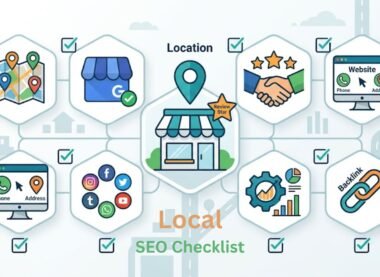
Complete Local SEO Checklist for Regional Visibility
Even if your website serves a global audience, you may also want to attract customers in specific cities or countries. A well-planned local seo checklist helps your business appear in local search results, Google Maps, and location-based searches.
Optimize Your Google Business Profile
If you have a physical business, create and verify your Google Business Profile.
Complete every section, including:
- Business name
- Address
- Phone number (NAP)
- Website URL
- Business hours
- Business categories
- High-quality photos
- Products or services
Keep your information accurate and updated across all platforms.
Maintain Consistent NAP Information
Your Name, Address, and Phone Number (NAP) should match exactly across:
- Your website
- Business directories
- Social media profiles
- Local listings
Consistency builds trust with both users and search engines.
Encourage Customer Reviews
Positive reviews improve credibility and may increase local rankings.
Best practices include:
- Ask satisfied customers for honest reviews.
- Respond professionally to every review.
- Address negative feedback constructively.
- Never purchase fake reviews.
Complete Shopify SEO Checklist
If you run an online store, a dedicated shopify seo checklist can help improve visibility and sales.
Optimize Product Pages
Every product page should include:
- Unique product title
- Original product description
- Optimized images
- Descriptive ALT text
- Customer reviews
- Internal links to related products
Avoid copying manufacturer descriptions.
Improve Category Pages
Category pages should:
- Include descriptive introductions.
- Target category-specific keywords.
- Use logical internal links.
- Display optimized metadata.
Optimize Collection URLs
Keep URLs clean and descriptive.
Example:
example.com/collections/wireless-headphones
Avoid unnecessary parameters whenever possible.
Complete Ecommerce SEO Checklist

Whether you use Shopify, WooCommerce, Magento, or another platform, an ecommerce seo checklist is essential.
Focus on:
- Product optimization
- Category optimization
- Structured data
- Product reviews
- Secure checkout
- Fast-loading pages
- Mobile usability
- Internal linking
- Breadcrumb navigation
- Inventory management
An effective e commerce seo checklist also ensures discontinued products are handled properly with redirects instead of broken pages.
SEO Checklist for Blog Posts
Every article should follow a consistent publishing process.
A complete seo checklist for blog posts includes:
- Keyword research
- Search intent analysis
- Unique title
- Meta description
- One H1 heading
- Proper H2 and H3 structure
- Internal links
- External authority links
- Image optimization
- FAQ section
- Conclusion
- Call to action
- Schema markup
- Mobile optimization
- Proofreading
- Grammar review
Publishing high-quality blog content consistently builds topical authority over time.
SEO Checklist for New Websites
Launching a website without SEO preparation often leads to poor visibility.
A complete seo checklist for a new website should include:
- Install an SSL certificate
- Configure Google Search Console
- Set up Google Analytics
- Create an XML sitemap
- Configure robots.txt
- Optimize website speed
- Design responsive pages
- Create clean URL structures
- Publish high-quality content
- Build internal links
- Add schema markup
- Submit sitemap
- Verify indexing
A detailed seo checklist for new websites helps establish a strong SEO foundation from the beginning.
Website Migration SEO Checklist
Website migrations can significantly impact rankings if not managed carefully. A complete website migration seo checklist helps preserve your organic traffic.
Before Migration
- Crawl your existing website.
- Back up all files and databases.
- Export current URLs.
- Record top-performing pages.
- Benchmark rankings and traffic.
- Review backlinks.
During Migration
- Use 301 redirects for changed URLs.
- Preserve metadata.
- Keep internal links updated.
- Maintain site structure where possible.
After Migration
- Test redirects.
- Submit updated XML sitemap.
- Monitor indexing.
- Fix crawl errors.
- Track keyword rankings.
- Check page speed and Core Web Vitals.
Careful planning minimizes traffic loss during migration.
Build an Effective Internal Linking Strategy
Internal links help search engines discover content while guiding visitors to additional resources.
For example:
- Readers interested in technology can explore Tech All World for emerging tech news and in-depth digital guides.
- Tutorials, software recommendations, and gadget reviews are available on Techh AtoZ.
- Food lovers can discover restaurant guides and dining recommendations on Restaurent.
- Travelers looking for coastal destinations can visit Beach Near for beach travel inspiration.
Use descriptive and relevant anchor text that clearly communicates the topic and purpose of the linked page.
Build High-Quality External Links
External links improve credibility when they point to trustworthy resources.
Consider linking to authoritative organizations such as:
- Google Search Central
- Bing Webmaster Guidelines
- W3C
- MDN Web Docs
- Schema.org
Only link to reputable and relevant sources that add value for readers.
Common SEO Mistakes to Avoid
Many websites struggle because of preventable SEO errors.
Avoid these common mistakes:
- Keyword stuffing
- Duplicate content
- Thin articles
- Slow loading pages
- Missing meta descriptions
- Broken internal links
- Poor mobile experience
- Ignoring search intent
- Low-quality backlinks
- Missing image ALT text
- Orphan pages
- Incorrect canonical tags
- Forgetting schema markup
- Publishing without proofreading
- Ignoring Core Web Vitals
Regular audits help identify and resolve these issues before they affect rankings.
Monthly SEO Maintenance Checklist
SEO requires continuous improvement. Review your website every month using this checklist:
- Publish fresh, high-quality content.
- Update older articles.
- Fix broken links.
- Improve internal linking.
- Check indexing status.
- Review keyword rankings.
- Monitor Core Web Vitals.
- Optimize page speed.
- Audit backlinks.
- Update structured data.
- Analyze user behavior.
- Remove outdated content.
- Refresh metadata.
- Improve click-through rates.
- Review competitor performance.
Consistent maintenance keeps your website competitive in search results.
SEO Checklist Template
Use this simple seo checklist template before publishing any new page or article:
| Task | Status |
| Keyword research completed | ☐ |
| Search intent matched | ☐ |
| SEO-friendly URL created | ☐ |
| Title tag optimized | ☐ |
| Meta description written | ☐ |
| H1 heading added | ☐ |
| H2 and H3 headings organized | ☐ |
| Images compressed | ☐ |
| ALT text added | ☐ |
| Internal links inserted | ☐ |
| External authority links added | ☐ |
| Schema markup implemented | ☐ |
| Mobile-friendly design verified | ☐ |
| Page speed tested | ☐ |
| Proofreading completed | ☐ |
| XML sitemap updated | ☐ |
| Page submitted for indexing | ☐ |
Following this template ensures consistency across your website.
Final Thoughts
A successful SEO Checklist is much more than a list of tasks—it is a long-term strategy for building visibility, authority, and sustainable organic growth. By combining a strong on-page seo checklist, technical seo checklist, off page seo checklist, mobile seo checklist, and international seo checklist, you create a website that is easier for search engines to crawl and more valuable for users around the world.
Remember that SEO is an ongoing process. Search engine algorithms evolve, user behavior changes, and competitors continue to improve. Regularly updating your content, monitoring performance, fixing technical issues, and publishing helpful resources will keep your website competitive.
Whether you’re managing a personal blog, a business website, or a global eCommerce store, following this comprehensive will help you build a strong digital presence, attract qualified visitors, and achieve long-term success in search engine rankings.
Frequently Asked Questions
Q: What is an SEO checklist?
Ans: An SEO Checklist is a step-by-step guide that helps optimize a website for better search engine rankings, increased organic traffic, and improved user experience.
Q: Why is international SEO important?
Ans: International SEO helps search engines deliver the correct language and regional version of your website to users in different countries, increasing global visibility and engagement.
Q: How often should I perform an SEO audit?
Ans: A comprehensive SEO audit should be conducted at least once every month, with larger technical audits performed quarterly.
Q: Does mobile optimization affect SEO?
Ans: Yes. Google uses mobile-first indexing, making mobile usability a critical ranking factor.
Q: Is technical SEO necessary for small websites?
Ans: Absolutely. Technical SEO improves crawling, indexing, security, and website performance regardless of website size.
Q: Can I rank without backlinks?
Ans: It is possible for low-competition keywords, but earning high-quality backlinks significantly improves your chances of ranking for competitive search terms.
Q: How Long Does It Take for SEO to Deliver Noticeable Results?
Ans: SEO is a long-term strategy. Depending on competition and website authority, noticeable improvements often appear within three to six months, while highly competitive industries may require more time.




1 Comment