 -by
-by The 2026 solar eclipse is one of the most anticipated astronomical events of the decade. Whether you are a casual skywatcher, a photography enthusiast, a science student, or simply curious about space, this event provides a remarkable opportunity to witness a rare celestial alignment.
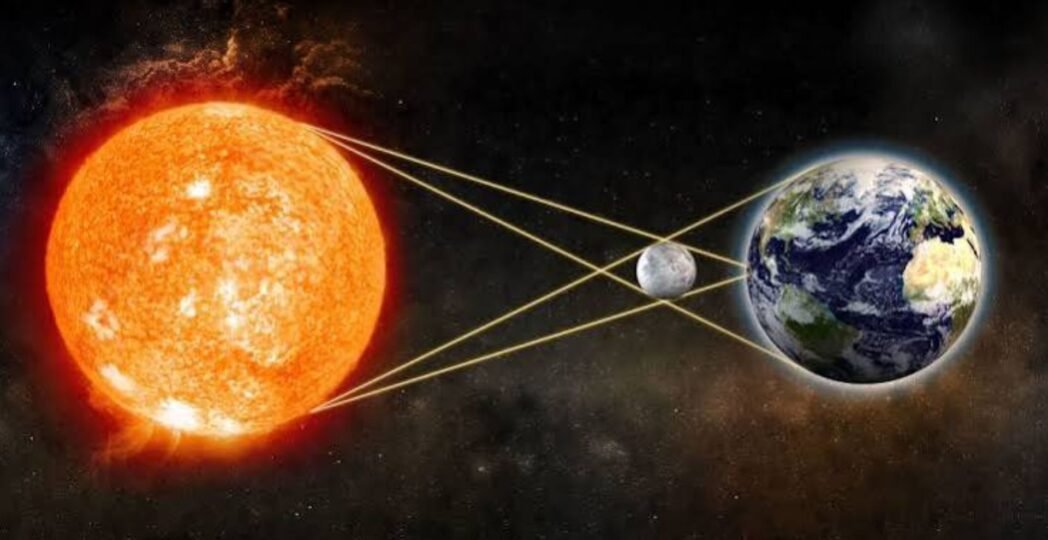
A solar eclipse happens when the Moon passes between Earth and the Sun, temporarily covering part or all of the Sun’s visible disk. Although these events occur somewhere on Earth every year, each one follows a unique path and creates different viewing conditions. The 2026 event stands out because people across parts of Europe, Greenland, Iceland, and nearby regions will have opportunities to experience either totality or a partial eclipse.
In this detailed guide, you will learn what makes the 2026 eclipse special, when and where it can be observed, how this celestial phenomenon occurs, how to protect your eyes, and how to capture it through photography. You will also explore its scientific importance, common misconceptions, and frequently asked questions. By the end of this guide, you will have a clear understanding of what to expect and how to prepare for this extraordinary event in the sky.
What Is a Solar Eclipse?
A solar eclipse occurs when the Moon passes directly between the Earth and the Sun, casting a shadow on part of the Earth’s surface.
Simple Definition
A solar eclipse is an astronomical event in which the Moon blocks the Sun’s light from reaching parts of Earth. Depending on the alignment of the Sun, Moon, and Earth, observers may see:
- A complete eclipse of the Sun
- A partial eclipse of the Sun
- An annular solar eclipse
- A hybrid solar eclipse
The Solar Eclipse 2026 is primarily known for its total eclipse path across certain regions and partial visibility across a much larger area.
Solar Eclipse 2026 at a Glance
| Feature | Details |
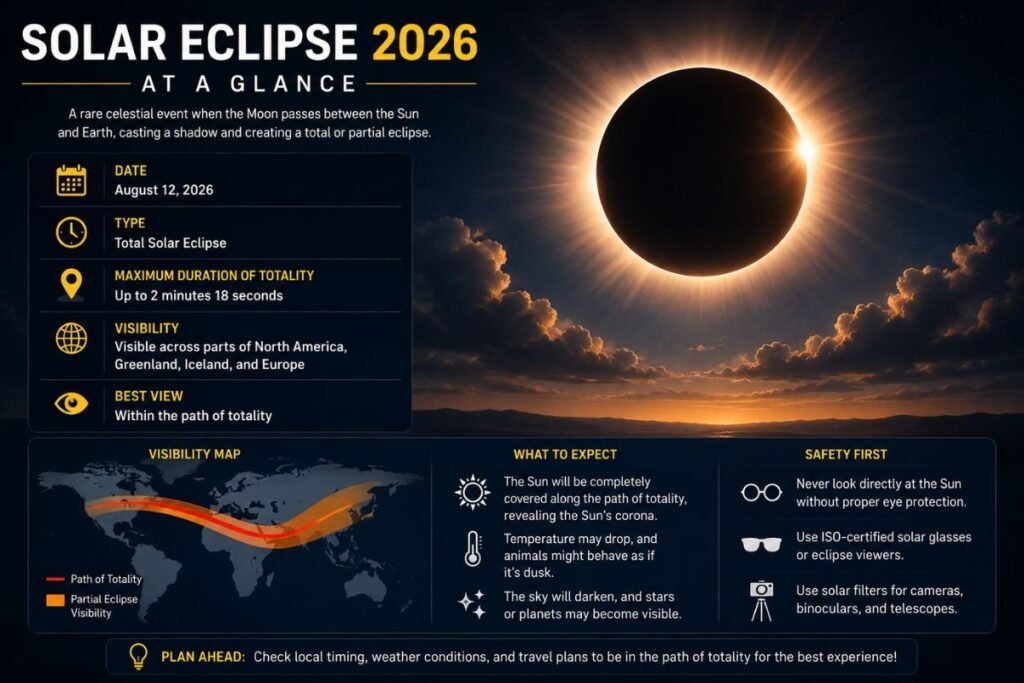
| Event | Solar Eclipse 2026 |
| Date | August 12, 2026 |
| Type | Total Solar Eclipse |
| Visibility | Europe, Greenland, Iceland, Arctic regions, parts of Africa and North America |
| Maximum Duration | Varies by location |
| Safe Viewing Required | Yes |
| Best Observation Areas | Regions within the path of totality |
Because eclipse calculations are continuously refined by astronomical organizations, viewers should check updated local timing information closer to the event date through official astronomy sources.
Why the Solar Eclipse 2026 Is Special
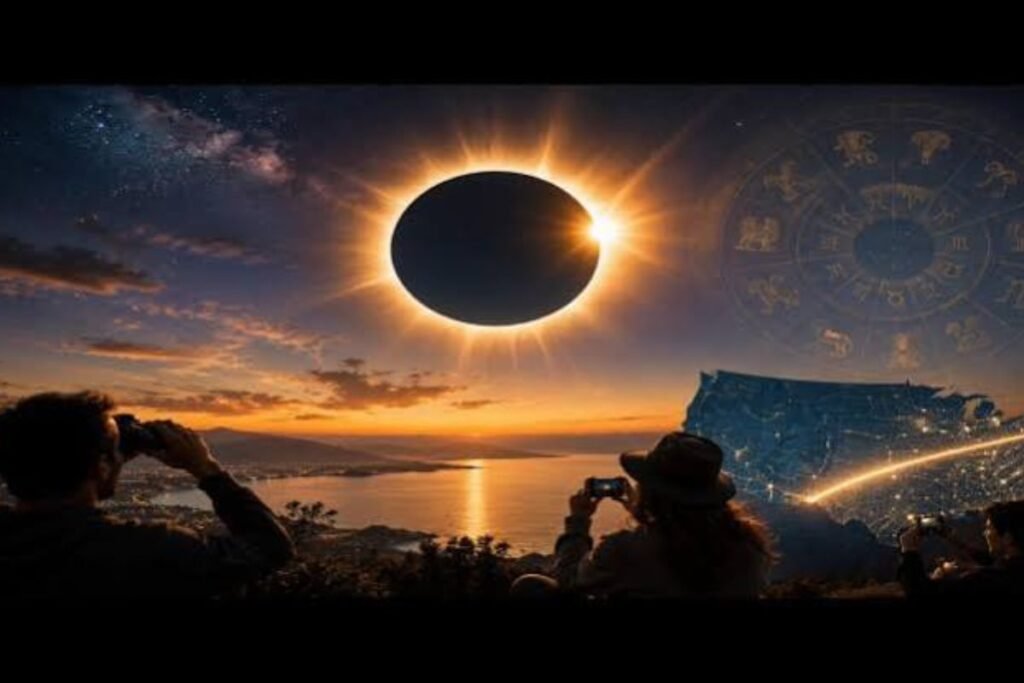
Every solar eclipse is unique, but the 2026 eclipse stands out for several reasons.
1. Accessible Viewing Locations
Unlike some eclipses that occur mostly over oceans, the Solar Eclipse 2026 crosses populated regions where many people can travel relatively easily.
2. Rare Totality Experience
A total solar eclipse is one of the most dramatic events visible from Earth. During totality:
- Day briefly turns into twilight
- Bright stars and planets may become visible
- The Sun’s corona appears around the Moon
- Temperatures may temporarily drop
3. Scientific Value
Astronomers continue studying:
- Solar corona behavior
- Solar magnetic activity
- Atmospheric changes during eclipses
- Effects on wildlife and ecosystems
4. Public Interest
The event is expected to attract:
- Scientists
- Amateur astronomers
- Educators
- Photographers
- Space enthusiasts
- Tourists
How Does a Solar Eclipse Work?
Understanding the mechanics of a solar eclipse makes the event even more fascinating.
The Three Main Objects
A solar eclipse involves:
- The Sun
- The Moon
- The Earth
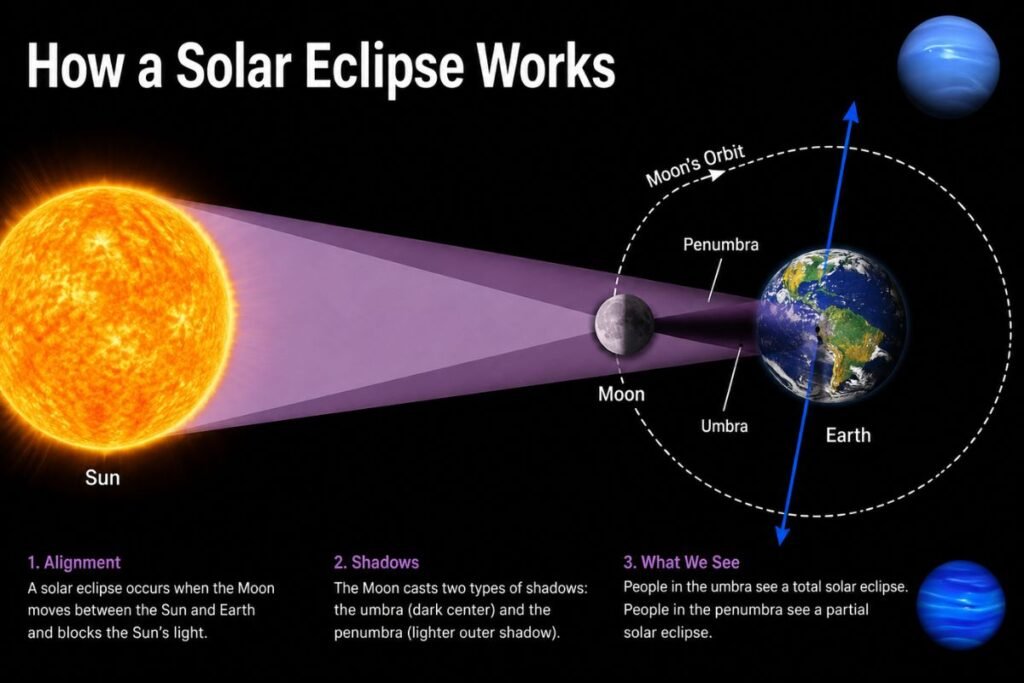
When these bodies align perfectly, the Moon’s shadow falls on Earth.
The Shadow Zones
The Moon creates two primary shadow regions:
Umbra
The darkest part of the shadow. People within the umbra can witness a total solar eclipse.
Penumbra
The lighter outer shadow. Observers within the penumbra can see only a portion of the Sun obscured.
Why Solar Eclipses Are Rare
The Moon travels around Earth along a slightly inclined orbital path.
Because of this tilt:
- Most new moons do not create eclipses.
- Perfect alignment only happens occasionally.
- Total eclipses occur along relatively narrow paths.
Types of Solar Eclipses
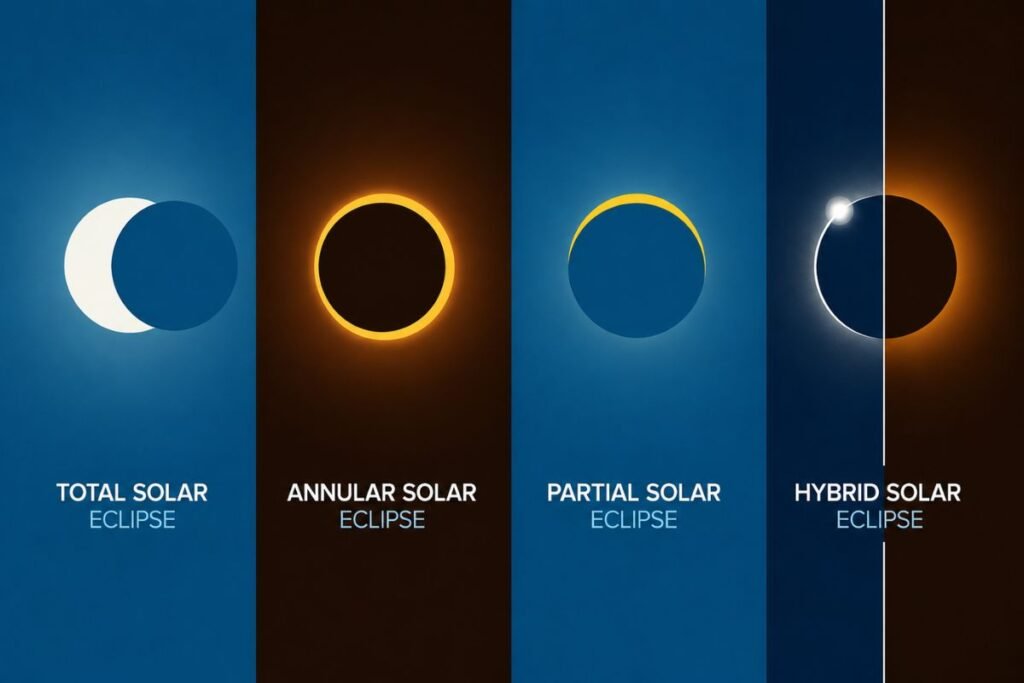
Total Solar Eclipse
The Moon completely covers the Sun. This is the type associated with the main path of the Solar Eclipse 2026.
Characteristics:
- Complete darkness during totality
- Visible solar corona
- Most dramatic eclipse experience
Partial Solar Eclipse
Only part of the Sun is covered. This is the most common viewing experience outside the path of totality.
Annular Solar Eclipse
The Moon appears slightly smaller than the Sun. A bright ring remains visible around the Moon. This creates the famous “Ring of Fire” effect.
Hybrid Solar Eclipse
A rare type of eclipse that looks total from certain locations and annular from others.
Where Will the Solar Eclipse 2026 Be Visible?
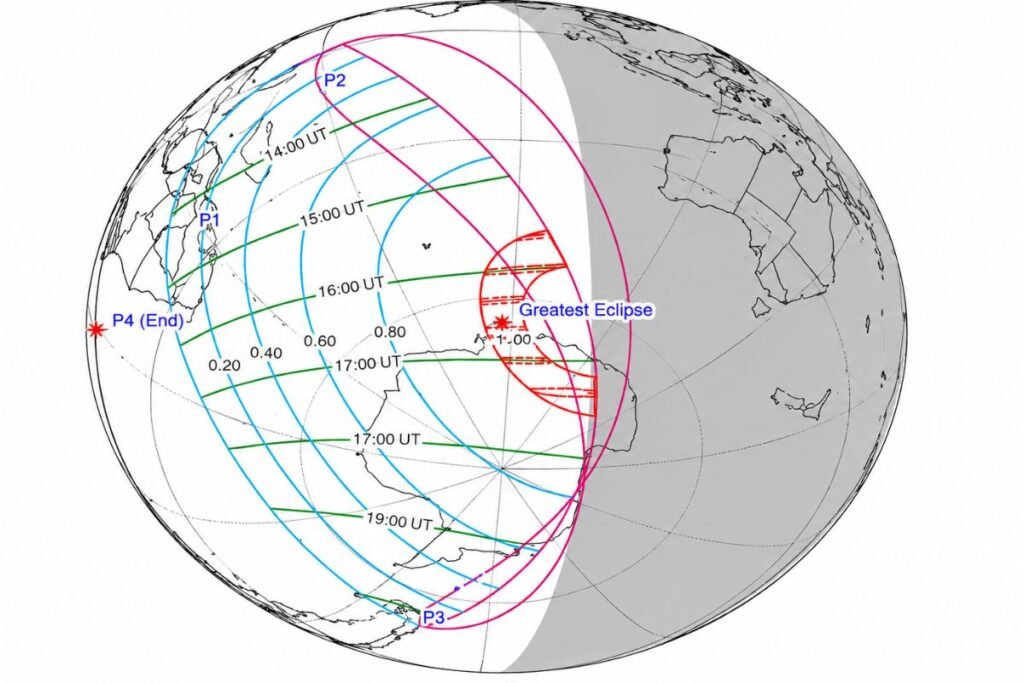
Visibility depends on location.
Regions Likely to Experience Totality
The path of totality is expected to cross areas including:
- Greenland
- Iceland
- Northern Spain
- Portions of the Arctic region
Regions Likely to Experience Partial Eclipse
Many additional locations may see a partial eclipse, including parts of:
- Europe
- Africa
- North America
The exact viewing experience depends on your position relative to the eclipse path.
How to Check Your Location
Closer to the event, consult:
- National observatories
- Astronomy organizations
- Planetarium websites
- Eclipse maps
- Space agency resources
These tools provide accurate local timing and visibility data.
What Can You Expect to See During a Total Solar Eclipse?
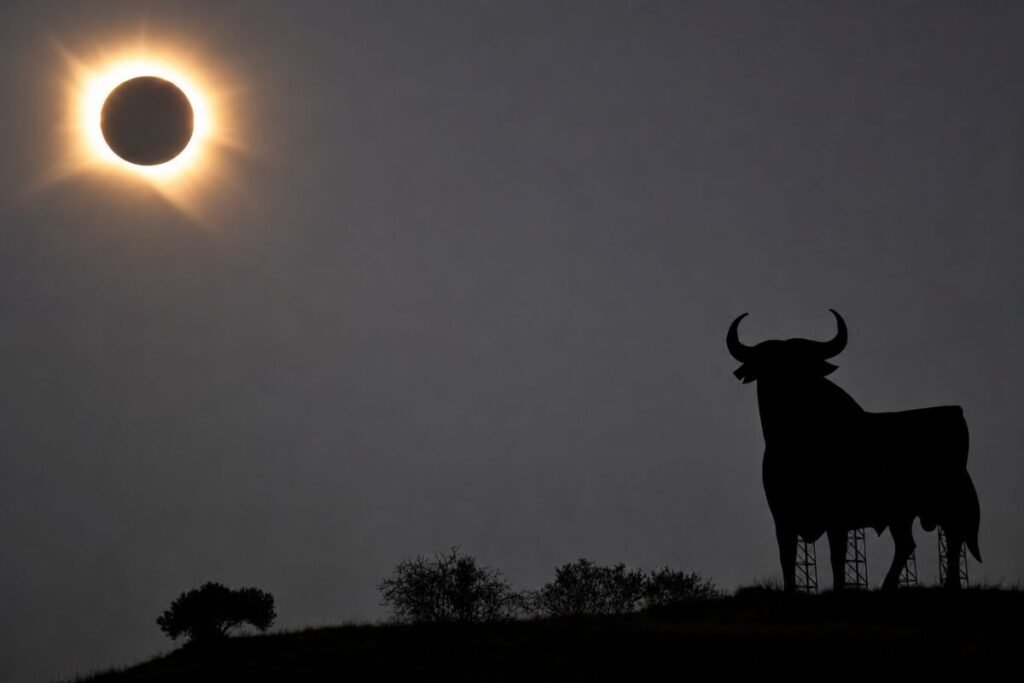
A total solar eclipse unfolds in several stages.
First Contact
The Moon first begins covering the Sun.
You may notice:
- A small dark notch
- Gradual reduction in sunlight
Partial Phase
Ambient light changes subtly. The Moon continues moving across the Sun. Shadows become sharper.
Totality
This is the highlight of the event.
Observers may witness:
- Sudden darkness
- The Sun’s corona
- Bright planets
- A twilight horizon
- Rapid environmental changes
End of Totality
A bright flash appears as sunlight returns. This phenomenon is known as the “Diamond Ring Effect.”
Final Contact
The Moon fully leaves the Sun’s disk. Normal daylight returns.
The Science Behind the Solar Corona
One of the biggest reasons astronomers study eclipses is the corona.
What Is the Corona?
The corona is the Sun’s outer atmosphere. Under normal conditions, it remains hidden because the Sun’s intense brightness outshines it.
During totality:
- The Moon blocks the bright solar disk.
- The corona becomes visible.
Why Scientists Study It
Researchers investigate:
- Solar winds
- Magnetic fields
- Plasma movement
- Space weather
Understanding the corona helps scientists better predict solar activity that can affect:
- Satellites
- GPS systems
- Communications networks
- Power grids
This makes eclipse observations important even in our technology-driven world.
Solar Eclipse 2026 and Technology
The eclipse is not only exciting for astronomers. It also has strong connections to modern technology.
Satellite Monitoring
Scientists use satellites to monitor:
- Solar radiation
- Magnetic activity
- Atmospheric changes
AI and Data Analysis
Modern astronomy increasingly uses:
- Artificial intelligence
- Machine learning
- Automated image processing
These technologies help researchers analyze vast amounts of eclipse data.
Live Streaming
People around the world can watch eclipse coverage through:
- Space agencies
- Science organizations
- Astronomy channels
- Educational institutions
If you’re planning to watch the 2026 solar eclipse from a remote location where cellular coverage may be unreliable, a satellite phone can provide an important backup for communication and emergencies.
How to Watch the Solar Eclipse Safely
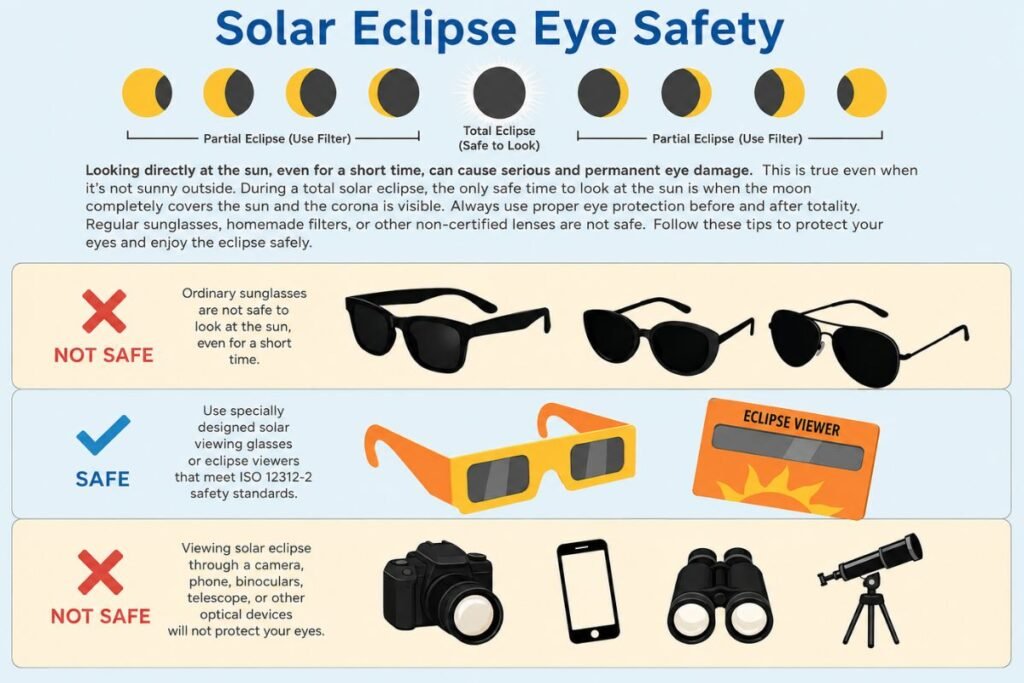
Safety is the most important part of eclipse viewing.
Never Look Directly at the Sun
Viewing the Sun without adequate eye protection can result in permanent retinal damage, even when most of the Sun is obscured.
Use Certified Eclipse Glasses
Only use eclipse glasses that meet recognized safety standards.
Check for:
- Proper certification
- No scratches or damage
- Reputable manufacturers
Safe Viewing Methods
Other options include:
- Solar viewers
- Solar filters
- Pinhole projectors
- Telescope solar filters
- Binocular solar filters
If you’re planning to watch the eclipse through a digital device, understanding the latest display technology can help you choose a screen that delivers clearer and more detailed visuals.
Avoid Unsafe Methods
Do not use:
- Regular sunglasses
- Camera lenses without filters
- Binoculars without solar protection
- CDs or DVDs
- Smoked glass
These do not provide adequate protection. If you plan to follow the eclipse through online streams, live coverage, or astronomy apps, choosing the right portable device can make the experience more comfortable—see our guide to tablet vs notebook vs laptop to find the best option for your needs.
Best Equipment for Eclipse Observation
Different viewers have different goals.
For Beginners
Recommended:
- Eclipse glasses
- Pinhole projector
Advantages:
- Affordable
- Easy to use
- Safe
If you want to turn your solar eclipse footage or images into engaging visual content, you can also explore these free AI video generator tools to create informative videos quickly.
For Hobbyists
Recommended:
- Solar binoculars
- Small telescopes with solar filters
Advantages:
- Better detail
- Enhanced viewing experience
For Advanced Observers
Recommended:
- Dedicated solar telescopes
- Tracking mounts
- High-resolution cameras
Advantages:
- Professional-level observations
- Astrophotography opportunities
If you’re planning to capture the eclipse or edit your photos afterward, a powerful and portable laptop such as the MacBook Air M4 can be a useful companion for photographers and content creators.
How to Photograph the Solar Eclipse
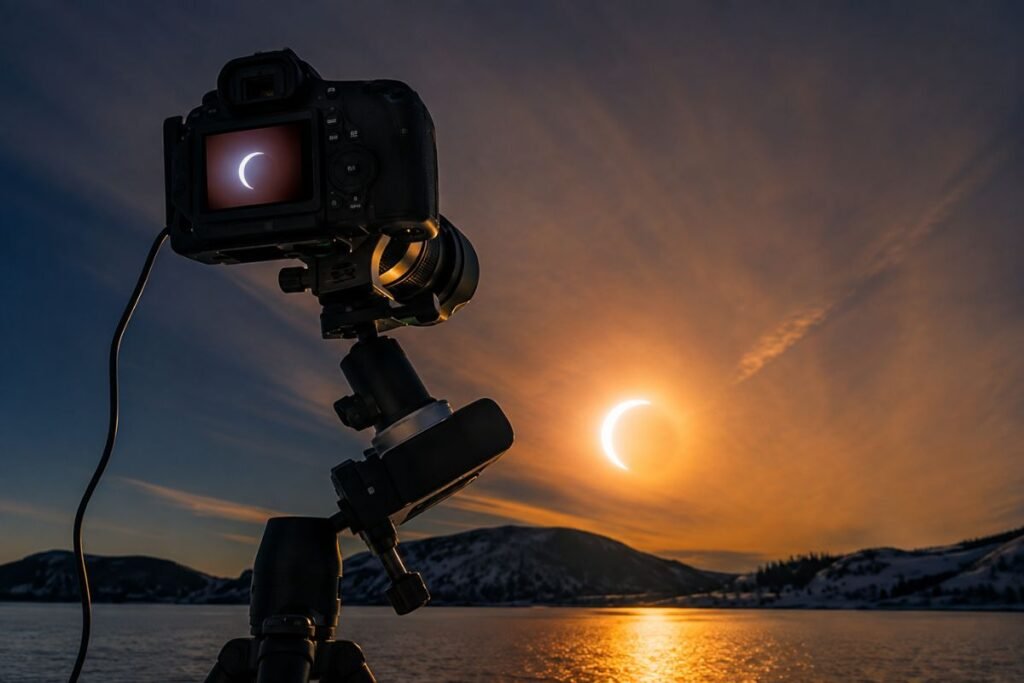
Eclipse photography requires planning.
Essential Equipment
- Camera with manual controls
- Tripod
- Telephoto lens
- Solar filter
- Remote shutter release
Basic Steps
- Choose your location early.
- Check weather forecasts.
- Practice camera settings beforehand.
- Use a solar filter during partial phases.
- Follow safety guidelines.
Common Photography Mistakes
Avoid:
- Forgetting solar filters
- Waiting until eclipse day to practice
- Using automatic camera settings only
- Ignoring weather conditions
- Missing totality while adjusting equipment
Many experienced eclipse chasers recommend spending at least part of totality simply observing rather than focusing entirely on photography.
If you’re planning to capture the eclipse with a smartphone, choosing a phone with a capable camera system can make a noticeable difference—our Google Pixel 11 Pro review explores its camera capabilities and imaging features.
Weather Considerations for Solar Eclipse 2026
Cloud cover can significantly affect eclipse viewing.
Factors That Matter
- Cloud thickness
- Humidity
- Regional climate
- Seasonal weather patterns
Planning Tips
- Monitor forecasts several days ahead.
- Have backup viewing locations.
- Arrive early.
- Consider mobility if weather changes.
Weather remains one of the biggest uncertainties for any eclipse observer.
Solar Eclipse vs Lunar Eclipse
Many people confuse solar and lunar eclipses.
| Feature | Solar Eclipse | Lunar Eclipse |
| Moon Position | Between Earth and Sun | Behind Earth |
| Visibility Area | Narrow path | Large portion of Earth |
| Eye Protection Needed | Yes | No |
| Duration | Shorter totality | Longer visibility |
| Frequency at One Location | Less common | More common |
A lunar eclipse occurs when Earth comes between the Sun and the Moon, blocking sunlight from reaching the Moon, whereas a solar eclipse occurs when the Moon moves between the Sun and Earth, blocking part of the sunlight from reaching Earth.
Common Myths About Solar Eclipses
Myth 1: Eclipses Are Dangerous Events
The eclipse itself is not dangerous. Unsafe viewing methods create the risk.
Myth 2: Eclipses Cause Permanent Environmental Damage
Scientific evidence does not support this claim. Temporary changes may occur, but they are short-lived.
Myth 3: Pregnant Women Must Stay Indoors
There is no scientific evidence supporting eclipse-related restrictions for pregnancy.
Myth 4: Electronics Stop Working
Modern electronics generally continue functioning normally during an eclipse.
Myth 5: Total Darkness Lasts a Long Time
Totality usually lasts only a few minutes. The entire eclipse event lasts much longer.
Effects of a Solar Eclipse on Nature
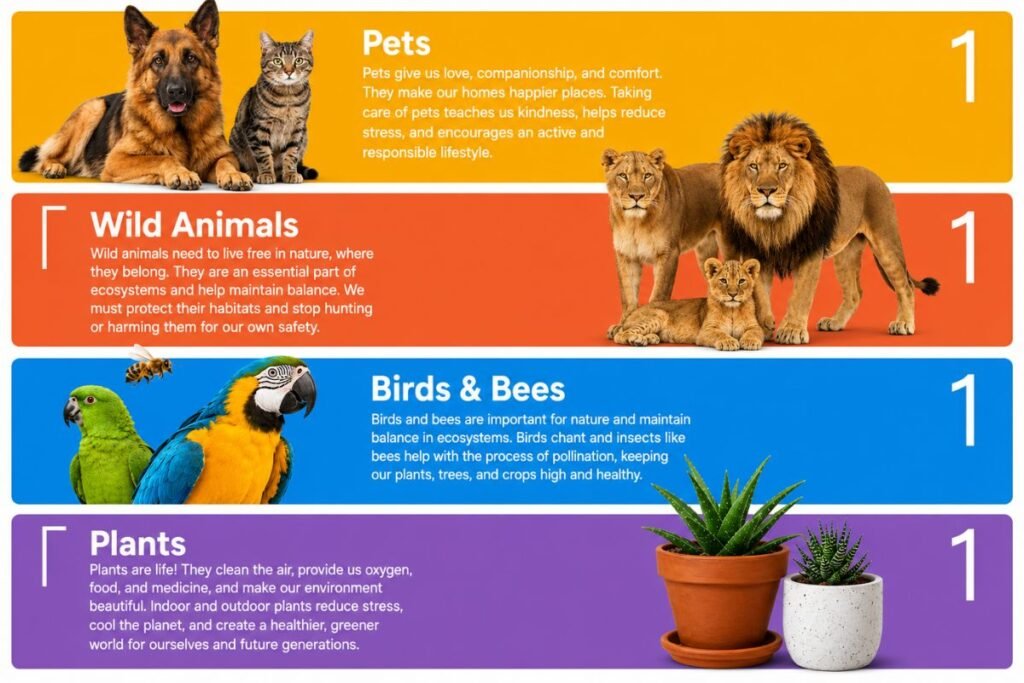
Animals sometimes react noticeably during eclipses.
Birds
Some birds:
- Stop singing
- Return to nesting areas
Insects
Nocturnal insects may become active.
Domestic Animals
Pets may display temporary confusion.
Temperature Changes
A short temperature drop can occur due to reduced solar radiation. These effects are usually temporary and disappear once sunlight returns.
Historical Importance of Solar Eclipses
Throughout history, eclipses have fascinated humanity.
Ancient civilizations often viewed them as:
- Omens
- Divine messages
- Supernatural events
Today, eclipses are understood through astronomy and physics.
Major Historical Contributions
Eclipse observations have helped scientists:
- Measure celestial movements
- Improve astronomical models
- Test scientific theories
One famous example involved observations that supported Albert Einstein’s theory of general relativity during a 1919 solar eclipse.
How Scientists Predict Solar Eclipses
Modern eclipse predictions are highly accurate.
Key Data Used
Scientists calculate:
- Earth’s orbit
- Moon’s orbit
- Rotation of Earth
- Gravitational interactions
Modern Tools
Predictions rely on:
- Advanced mathematics
- Computer modeling
- Satellite observations
- Historical eclipse records
This allows experts to forecast eclipse paths years or even decades in advance.
Travel Planning for Solar Eclipse 2026
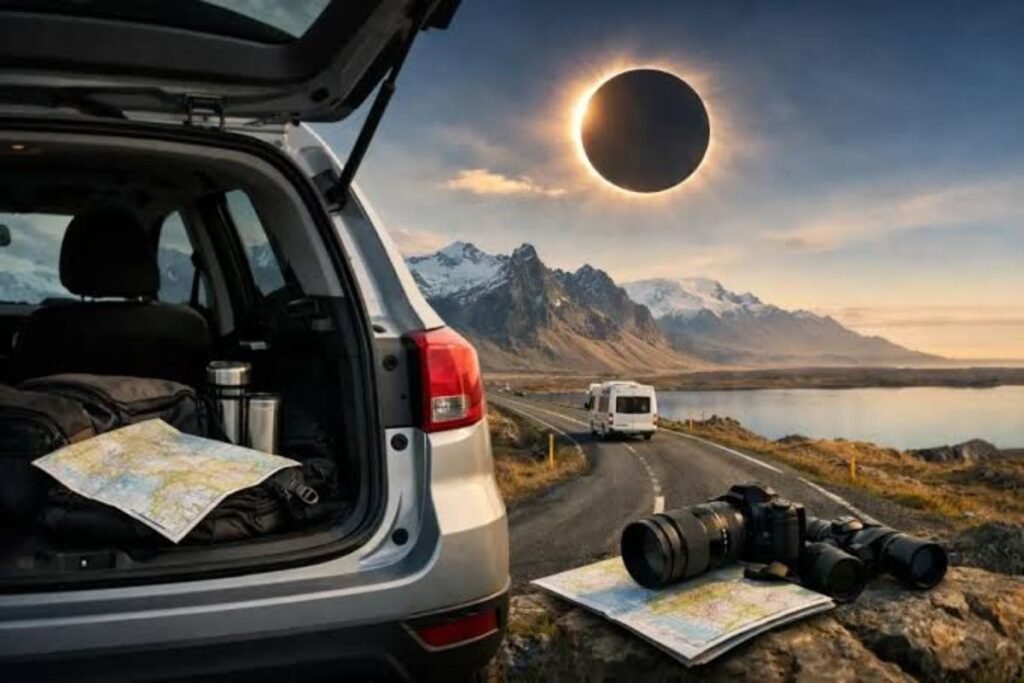
Many people travel specifically to experience totality.
Factors to Consider
Accommodation
Hotels in eclipse regions often fill quickly. Book early if you plan to travel.
Transportation
Expect:
- Increased traffic
- Busy airports
- Crowded public transport
Viewing Site
Look for locations with:
- Open horizons
- Good weather prospects
- Safe access
- Minimal obstructions
Travel Checklist
- Eclipse glasses
- Camera equipment
- Power banks
- Water
- Snacks
- Weather-appropriate clothing
- Backup transportation plans
If you’re planning to turn the eclipse into a memorable outdoor trip, you can also explore beautiful beach destinations and coastal travel ideas before choosing your perfect viewing location. After watching the solar eclipse, make your trip even more enjoyable by discovering restaurant guides, local food experiences, and dining ideas for your destination.
Best Practices for First-Time Eclipse Viewers
If this is your first eclipse, keep things simple.
Do
- Learn local eclipse times.
- Arrive early.
- Test equipment beforehand.
- Prioritize safety.
- Enjoy the experience.
Don’t
- Depend solely on smartphone cameras.
- Ignore weather forecasts.
- Wait until the last minute to prepare.
- Use unsafe viewing methods.
Many first-time observers underestimate how quickly totality passes. Being prepared helps you enjoy every moment.
If you’re planning to research the eclipse, follow live coverage, or keep your viewing guides and photos organized, a reliable device can make the experience easier—check out our guide to the best affordable laptops for budget-friendly options.
Solar Eclipse 2027
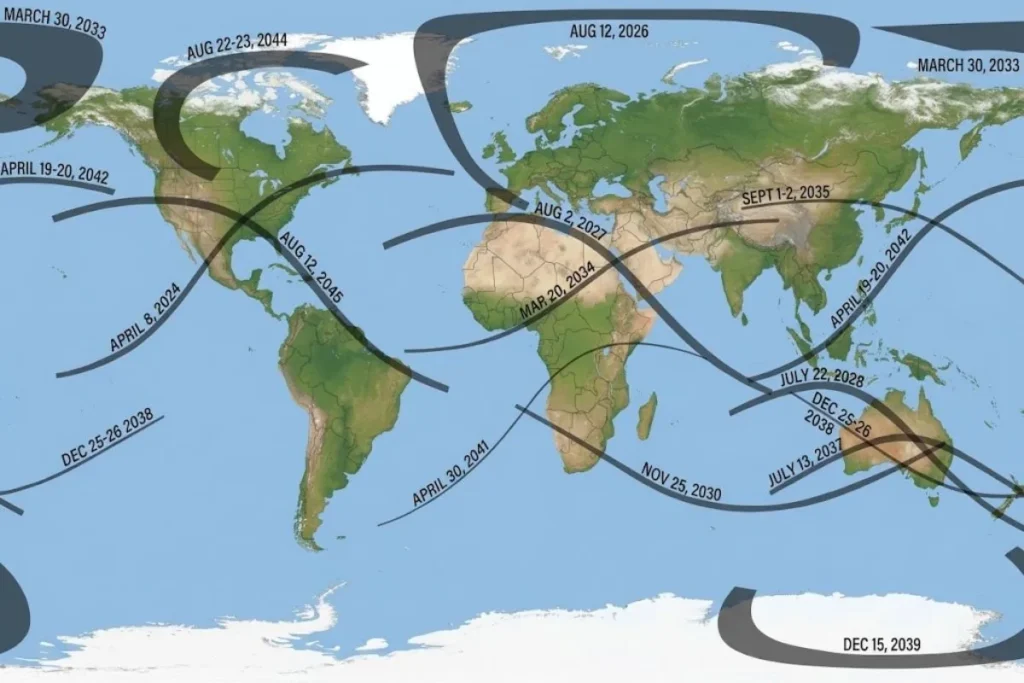
The total solar eclipse on August 2, 2027, dubbed the “Eclipse of the Century,” will feature an exceptionally long totality lasting up to 6 minutes and 22 seconds. The path of totality crosses southern Spain, North Africa, and the Middle East, offering prime viewing in cities like Luxor, Egypt, and Cádiz, Spain.
Key Details:
- Date: Monday, August 2, 2027
- Max Totality Duration: 6 minutes, 22 seconds (near Luxor, Egypt)
- Greatest Eclipse Time: ~10:06 UTC
Path of Totality Locations:
- Europe: Southern Spain (such as Cádiz) and Gibraltar
- North Africa: Morocco (Tangiers), Algeria, Tunisia, Libya (Benghazi), and Egypt (Luxor)
- Middle East & Arabian Peninsula: Saudi Arabia (Jeddah), Yemen, and Somalia
If you are planning to travel for this event, let us know in the comments section if you would like recommendations on the best viewing spots, weather prospects, or travel planning tips for Egypt or Spain.
Conclusion
The Solar Eclipse 2026 will be one of the most exciting astronomical events visible from Earth in the coming years. Beyond its breathtaking visual appeal, it offers a valuable opportunity to learn about astronomy, solar science, orbital mechanics, and the technologies used to study our universe. Whether you plan to travel into the path of totality or watch a partial eclipse from your local area, preparation is essential.
Understanding eclipse safety, checking accurate viewing information, monitoring weather conditions, and planning can transform the event from a simple observation into a memorable educational experience. For beginners, the eclipse is a perfect introduction to astronomy.
For experienced observers, photographers, and researchers, it presents another chance to study and document one of nature’s most remarkable phenomena. As August 12, 2026 approaches, staying informed through trusted scientific and astronomical sources will help you make the most of this rare celestial event.
If you’re planning to watch the 2026 solar eclipse through online streams or public Wi-Fi, you can also learn how to create your own VPN server for a more private and secure internet connection.
Frequently Asked Questions
Q. When is the Solar Eclipse 2026?
Ans: The Solar Eclipse 2026 is scheduled for August 12, 2026. Visibility and timing vary depending on location.
Q. Will the Solar Eclipse 2026 be visible worldwide?
Ans: No. Different regions will experience different levels of visibility. Some areas will see totality, while others may only observe a partial eclipse.
Q. Is It Safe to Look Directly at a Solar Eclipse?
Ans: No. You should use certified eclipse glasses or approved solar viewing equipment except during the brief period of totality if you are within the path of totality and understand proper viewing guidelines.
Q. What is the path of totality?
Ans: The path of totality is the narrow region where observers can see the Sun completely covered by the Moon.
Q. How long will totality last?
Ans: The duration varies by location. Observers should consult official eclipse maps for exact local details.
Q. Can I photograph the eclipse with a smartphone?
Ans: Yes, but capturing high-quality eclipse images usually requires additional equipment and proper solar filters.
Q. What happens to animals during a solar eclipse?
Ans: Some animals may temporarily change behavior because they interpret the sudden darkness as evening.
Q. Why are solar eclipses rare at any one location?
Ans: The Moon’s shadow covers only a narrow path on Earth, and perfect alignment does not occur every month.
Q. What is the Diamond Ring Effect?
Ans: The Diamond Ring Effect occurs when a small portion of sunlight shines around the Moon just before or after totality.
Q. Where can I get accurate eclipse timing information?
Ans: Reliable information is available from observatories, astronomy organizations, planetariums, and major space agencies.
Q. What is the difference between a total and partial solar eclipse?
Ans: A total eclipse completely covers the Sun, while a partial eclipse covers only part of it.
Q. Why is the solar corona important?
Ans: The corona helps scientists understand solar activity, space weather, and the Sun’s magnetic environment.